
 Select Languange
 English
 Spanish
 Polish
 Japanese
 Italy
EPE Foam Recycling: How Can UK Cold-Chain and Food Processing Businesses Handle Packaging Waste
EPE (expanded polyethylene) is commonly used in UK food processing plants, central kitchens and cold-chain distribution centres. Typical applications include insulated box liners, protective inserts for temperature-controlled pallets and food transport packaging. Used packaging and offcuts from EPE manufacturing can create a considerable amount of foam waste.
EPE is flexible and offers good cushioning performance, but its low density means that loose material takes up considerable storage space. For businesses that regularly generate this waste, reducing its volume is an important part of improving handling and transport efficiency.
EPE Packaging Waste from UK Cold-Chain and Food Processing Businesses
EPE packaging waste is generated throughout food storage, temperature-controlled transport and distribution. Common examples include insulated box liners, protective inserts for transport containers and cushioning materials used in fresh food deliveries.
For food processors and central kitchens, this waste is mainly generated during unpacking and packaging operations. Temperature-controlled packaging suppliers also produce offcuts, rejected products and other manufacturing scrap.
Unlike rigid packaging, EPE foam is flexible and elastic. Discarded liners and moulded packaging can take up considerable space, particularly when large quantities need to be stored or transported.
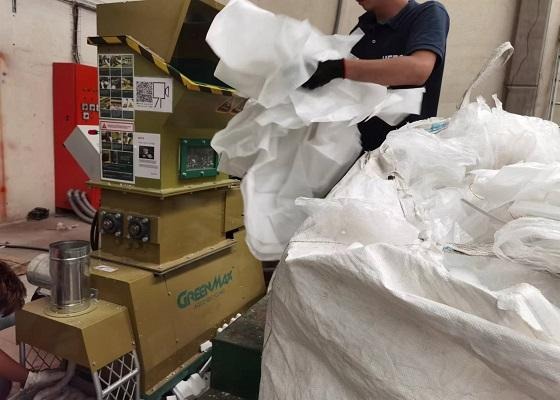
How Does GREENMAX ZEUS Compact EPE Foam?
EPE can be recycled, but its processing requirements differ from those of EPS. EPS has a relatively rigid cellular structure and can be broken down and mechanically compressed into compact blocks. EPE is more flexible, so mechanical pressure alone may not produce blocks that remain stable during handling and transport.
To address this, the GREENMAX ZEUS Series Densifier combines crushing, screw compaction and surface heating.
First, loose EPE foam is crushed into smaller pieces. A screw system then continuously conveys and compresses the material inside the forming chamber. The surface of the compacted material is subsequently heated, creating a melted outer layer while the material inside retains its shape.
This combination of mechanical compaction and surface heating helps produce more stable blocks that are easier to stack, handle and transport.
The GREENMAX ZEUS C100 achieves an EPE volume reduction ratio of up to 50:1, with a compressed material density of approximately 200–400 kg/m³and a rated processing capacity of 100 kg/h under standard feeding conditions.
The resulting blocks take up considerably less space than loose EPE. This helps UK cold-chain distributors make better use of storage and vehicle capacity, while EPE packaging manufacturers can manage production offcuts more efficiently.
The compacted PE foam can then be supplied to downstream recyclers for further processing into recycled polyethylene materials, which can be used to manufacture other plastic products. The final application depends on material quality and downstream processing requirements. More information about Polyethylene Recycling is available here.
How Does a UK Logistics Company Recycle PE Foam Packaging?
A UK logistics company involved in transporting packaging products for Sealed Air faced challenges with the transportation of bulky PE foam waste.
The company delivered PE packaging products to foam processing businesses across different parts of the UK. On return journeys, it collected PE foam offcuts generated during their processing operations. However, transporting loose foam was inefficient because it occupied considerable vehicle space despite its low weight.
GREENMAX recommended a Z-C200 foam compactor based on the customer's material and processing requirements.
The machine uses screw compaction and surface heating to produce compact PE foam blocks. Its automatic cutting function also helps reduce manual handling.
The company uses its existing return transport routes to collect foam offcuts from different processing locations and brings them back to its warehouse for centralised compaction. This makes better use of existing logistics arrangements and simplifies subsequent storage and transportation.
UK cold-chain distributors generating packaging waste across multiple delivery locations may also consider a similar centralised collection approach, with equipment selected according to their actual material requirements.
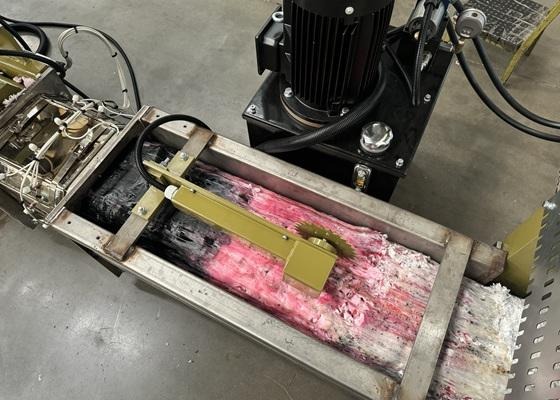
How to Choose the Right PE Foam Compactor?
Different PE foam materials vary in thickness, density and elasticity. Equipment selection should therefore take account of the material characteristics and actual processing requirements.
For EPE insulated liners and production offcuts, the GREENMAX ZEUS series is worth considering. Other PE foam materials requiring further densification can be assessed for screw-based thermal processing, depending on the required output density and downstream recycling requirements. Hydraulic compaction may also be suitable for certain materials.
The final equipment configuration depends on weekly waste volumes, material dimensions, available floor space, operating hours and the acceptance requirements of downstream recyclers.
Testing actual material samples before purchasing equipment is recommended to confirm feeding suitability and the expected processing results.
GREENMAX PE Foam Recycling Solutions for UK Businesses
GREENMAX provides compaction and recycling equipment for EPE and other suitable PE foam materials, helping food processors, cold-chain distributors and packaging manufacturers manage foam waste more efficiently.
Whether your business generates EPE insulated liners, food transport packaging or production offcuts, suitable equipment can be selected according to material characteristics, processing volumes and site conditions.
If your business regularly generates EPE packaging waste and wants to reduce storage requirements and transport costs, contact GREENMAX with details of your material, dimensions and estimated weekly waste volume. Our team can assess your requirements and recommend a suitable PE foam recycling solution.