
 Select Languange
 English
 Spanish
 Polish
 Japanese
 Italy
RGH Polystyrene Recycling Case: Processing EPS and EPE with the M-C200E
Based in Andover, RGH has around 25 years of experience in plastics and foam recycling. The company handles loose, compacted and pre-processed EPS, processing more than 1,000 tonnes a year, while its recycling activities also include low-density foam materials such as EPE.
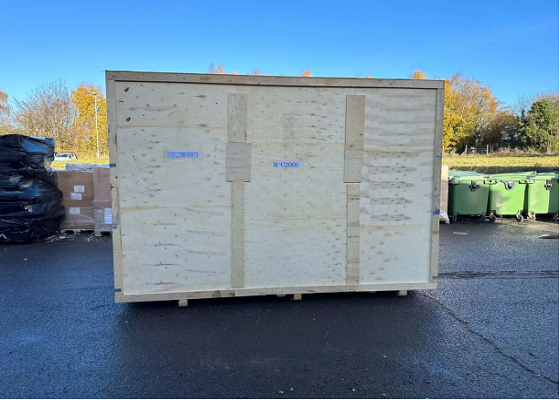
Reducing the volume of EPS was therefore nothing new for RGH. The company already had foam processing equipment in operation before introducing a GREENMAX machine. As its recycling activities developed, RGH began reassessing its existing densification methods and introduced the GREENMAX M-C200E in 2023. The machine arrived at the Andover site in November and was then put into day-to-day operation.
This was different from a business setting up an EPS recycling process for the first time. RGH needed to look beyond whether the machine could simply reduce foam volume. It also needed to see how the M-C200E would perform with the mix of material arriving at the site and whether the densified output would fit its existing storage, transport and downstream recycling arrangements.
Managing a Continuous Flow of EPS and EPE
A recycling site rarely receives foam in one consistent size or condition. EPS is lightweight and bulky, so loose material can quickly take up valuable storage space when collection volumes increase. Transporting it without prior densification also makes poor use of vehicle capacity, as a load can run out of space well before reaching its weight limit.
RGH also handles EPE, making polyethylene recycling another part of its foam recycling operation. Compared with the more brittle structure of EPS, EPE is flexible and tends to spring back after compression. The two materials therefore behave differently during feeding and densification. For a recycler working with both EPS and EPE, equipment has to cope with the variation found in everyday material rather than only performing well with uniform test samples.
This becomes increasingly important when polystyrene recycling is carried out at commercial scale. As volumes increase, densification, temporary storage and onward transport need to keep pace with one another. A bottleneck at any stage can quickly lead to bulky foam building up on site.
How the M-C200E Fits into RGH's Recycling Process
The GREENMAX M-C200E uses a hot-melt process to densify foam. Loose material is first reduced in size before entering the melting stage, producing a much denser material that takes up considerably less space in storage and during onward transport.
At RGH, the system also includes a conveyor to provide a more continuous feed into the machine. This is particularly relevant on a recycling site handling foam every day. Even if the main machine has sufficient processing capacity, repeatedly moving large pieces of foam from the storage area to the feed opening by hand can create another bottleneck.
RGH therefore assessed more than the M-C200E itself. The way material was fed into the system, the behaviour of EPS and EPE during operation, and the handling of the densified material afterwards all contributed to how well the equipment worked within the existing recycling process.
Around Nine Months of Day-to-Day Operation
After installation, RGH operated and tested the M-C200E for around nine months. During this period, the machine handled foam from different sources and in different sizes and forms, giving RGH a clearer view of its performance under normal working conditions than a short trial with a limited batch of material.
Following this period of operation, RGH gave positive feedback on the M-C200E and began considering the gradual replacement of some of its existing foam processing equipment. As a recycler already familiar with foam densification, RGH was able to assess the machine through sustained use within its existing operation rather than relying on a one-off demonstration.
Cold compaction and hot-melt densification each have their place in foam recycling. For RGH, the more relevant question was whether the processed material suited its existing storage, transport and downstream arrangements. This formed an important part of the company's longer-term assessment of the M-C200E.
.jpg)
What Does the RGH Project Show Other Foam Recyclers?
For businesses that have been involved in EPS recycling in the UK for many years, upgrading equipment does not necessarily mean that an existing machine has reached the end of its working life. Changes in collection volumes, material types, transport arrangements or downstream requirements can all be reasons to reassess an established processing system.
RGH took a practical approach. The M-C200E was put into the company's existing recycling process and assessed over an extended period before RGH considered further equipment changes.
For recyclers handling both EPS and EPE, running older foam processing equipment or expanding their recycling capacity, the RGH project provides a useful example. The key question is not simply what a machine can achieve on paper, but whether it can keep pace with day-to-day material volumes and fit effectively into existing storage, transport and downstream recycling operations.