 Select Languange
 English
 Spanish
 Polish
 Japanese
 Italy
Italy
How a Council Recycling Centre Improved Polystyrene Recycling with a GREENMAX Polystyrene Densifier
Blue Mountains City Council in New South Wales upgraded its polystyrene recycling service after a small rented machine could no longer keep pace with increasing volumes of EPS dropped off by residents and local businesses.
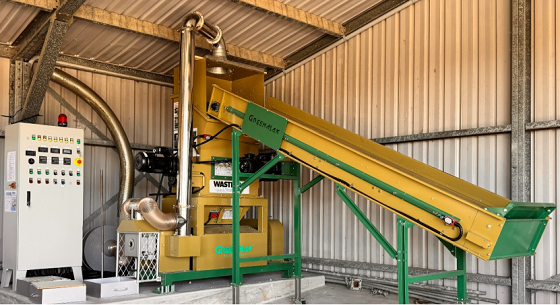
The council selected a GREENMAX M-C100 polystyrene densifier to increase processing capacity, reduce on-site storage pressure and create a clearer route from community collection to recycled material.
Although the project took place in Australia, it offers a practical model for UK councils, household waste recycling centres, material facilities and reprocessors dealing with bulky expanded polystyrene.
Project summary
Client: Blue Mountains City Council
Location: New South Wales, Australia
Site: Community Recycling Centre
Material: Expanded polystyrene packaging
Machine: GREENMAX M-C100 polystyrene densifier
Previous solution: Small rented machine
Earlier recycling volume: Around 7–8 tonnes per year
The operational problem with loose polystyrene
Polystyrene packaging is lightweight, protective and inexpensive, which explains its widespread use around appliances, electronics and other fragile goods.
Once used, however, the material becomes expensive to manage. Loose EPS occupies a large amount of space and can fill a vehicle before the load reaches an efficient weight.
For a council recycling centre, this creates four linked costs:
1. Storage cost: bulky foam consumes cages, skips and covered areas.
2. Handling cost: staff spend more time breaking down and moving material.
3. Collection cost: vehicles carry a poor payload and require more journeys.
4. Programme risk: limited processing capacity can lead to rejected material or service interruptions.
The Blue Mountains site had already established a collection route, but its equipment capacity was restricting further growth.
Why the rental machine became a bottleneck
The council originally rented a small local machine. It enabled the recycling centre to process around 7–8 tonnes of EPS annually and demonstrate that there was community demand for the service.
As participation increased, the machine’s low throughput became a problem. More residents and businesses were delivering EPS, but the centre could not increase processing at the same rate.
Continuing with the rental unit would have meant:
Increasing the amount of loose material held on site;
Spending more staff time managing the backlog;
Limiting future community participation;
Relying on a machine with insufficient capacity;
Postponing the development of a stable downstream route.
The council therefore moved from a pilot-scale system to a permanent higher-capacity solution.
Specifying the GREENMAX M-C100
The council contacted GREENMAX in March 2025. During the following two months, the project team assessed material volumes, the source of the EPS, site conditions, operating requirements and long-term value.
The M-C100 was selected because it could process loose EPS into dense, transport-ready material while remaining suitable for a municipal recycling-centre environment.
How the polystyrene densifier works
The GREENMAX M-C100 crushes the incoming EPS and uses controlled heat to densify it into solid ingots.
Although the exact process involves hot melting, polystyrene densifier is a useful UK purchasing term because it describes the equipment’s primary purpose: increasing material density before transport and reprocessing.
What changed after installation
Processing capacity increased
The council was able to move beyond the limitations of the small rental machine and process growing community volumes more reliably.
The site became easier to manage
Prompt densification reduced the amount of loose foam waiting in the recycling centre.
Transport became more economical
Dense ingots replaced bulky loads of loose packaging, allowing each collection to carry more recoverable polystyrene.
The programme gained long-term stability
The council now owns a machine selected around its actual operating conditions and expected growth.
Customer feedback
Kevin Stewart, Coordinator of Katoomba Waste Management Facility, said the machine had performed very well since installation. He identified only one or two minor modifications that he believed could make it even better.
The comment provides useful evidence that the M-C100 delivered the required increase in capacity while remaining practical for site staff.
Creating a traceable recycling route
A strong polystyrene recycling programme needs more than densification. It also needs an identified end market.
In this project, residents and businesses deliver the EPS to the Community Recycling Centre. The material is densified on site, recovered through the recycling network and converted into recycled polystyrene raw material.
The recycled material can be used in applications such as decorative picture-frame mouldings.
The route is therefore:
community drop-off → on-site densification → efficient transport → reprocessing → recycled products
This model helps a council demonstrate that collected EPS is being prepared for material recovery rather than simply moved to another waste site.
Relevance to UK councils and reprocessors
The UK’s packaging Extended Producer Responsibility framework applies to a range of organisations, including producers, reprocessors, exporters, compliance schemes and material facilities. It increases the importance of packaging data, recyclability and the cost of managing packaging waste.
For local authorities and recycling operators, the Blue Mountains case highlights several practical lessons:
Collection capacity and processing capacity must grow together;
Loose EPS should be densified before long-distance transport;
The equipment should be sized around expected participation, not only current tonnage;
A downstream reprocessor should be identified;
Operational feedback should be included in equipment optimisation.
FAQ
What is a polystyrene densifier?
A polystyrene densifier reduces the volume of loose expanded polystyrene and produces compact material that is easier to store and transport.
Why is polystyrene difficult for council recycling centres?
Its low density means it occupies a large amount of space, creates poor vehicle payloads and requires frequent handling.
Why did the council stop relying on its rented machine?
The smaller machine could not provide enough output as community and business participation increased.
Is hot-melted polystyrene recyclable?
Yes. When it is clean and prepared to the requirements of a downstream reprocessor, densified polystyrene can be converted into recycled raw material.
Discuss your polystyrene recycling programme with GREENMAX
GREENMAX can assess EPS volume, collection patterns, site space, staffing and downstream requirements before recommending a polystyrene densifier.