 Select Languange
 English
 Spanish
 Polish
 Japanese
 Italy
UK Proposes 65% Safeguard Tariff on PET Imports: What Could It Mean for the Recycled PET Market
The UK PET market could face changes to its import arrangements following a provisional recommendation from the Trade Remedies Authority (TRA). Published on 23 October 2026, the findings propose temporary safeguard measures covering imports of both virgin polyethylene terephthalate (PET) and recycled PET resin (rPET). Under the proposal, an annual tariff-rate quota of 192,963 tonnes would apply, with imports exceeding the relevant quota potentially subject to a 65% safeguard duty. If approved by the UK Government, the measure could begin on 1 December 2026 and remain in place for up to 200 days.
According to the TRA, UK PET imports increased by 68% between 2021 and 2025. The proposed measure covers both virgin and recycled PET, potentially affecting raw material sourcing and procurement arrangements across the UK packaging industry. However, the recommendation remains provisional and has not yet become a final government measure. For packaging manufacturers and PET recyclers, the reliability of material supplies and the role of domestic recycling capacity are therefore important considerations.
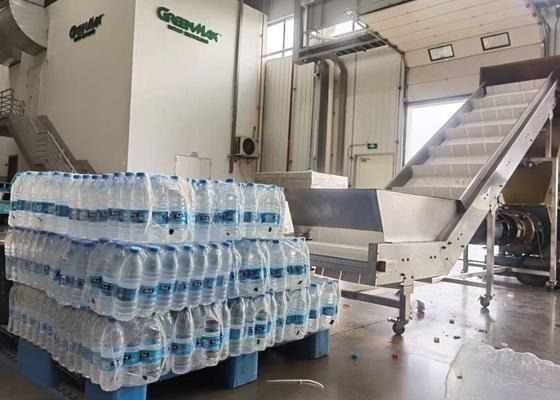
Improving PET Collection, Handling and Processing
PET recycling involves several stages, from handling containers with residual liquids to baling collected bottles and processing them into recycled PET flakes. Beverage manufacturers and retail distribution centres may need to handle rejected or liquid-filled PET bottles, while supermarkets, logistics warehouses and recycling centres need practical ways to store and transport loose bottles. Specialist recycling facilities, meanwhile, require suitable processing equipment to turn collected bottles into clean PET flakes.
GREENMAX provides equipment for these different stages, including PET dewatering compactors, bottle balers and PET bottle washing systems. The following three applications address common handling and processing requirements across the PET recycling chain.
1. PET Dewatering and Volume Reduction
PET bottles containing residual drinks or liquids can increase waste weight and create leakage, odour and hygiene problems during storage and transport. For beverage manufacturers, retail distribution centres and recycling operators, removing residual liquids before collection can simplify waste handling.
The GREENMAX Poseidon Series uses screw compression technology to separate liquids while reducing packaging volume. Models include P-C200, P-C350 and P-C900, suitable for PET bottles, aluminium cans, beverage cartons and yoghurt cups. For PET bottles, the volume reduction ratio can reach up to 10:1, making the equipment a practical option for businesses handling liquid-filled packaging.
For more information, visit the GREENMAX PET Dewatering Compactor.
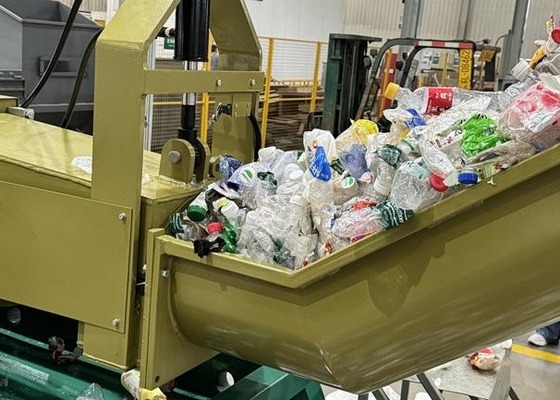
2. PET Bottle Baling for Efficient Storage and Transport
Loose PET bottles take up considerable storage space, making collection and transportation less efficient. A PET bottle baler compresses them into compact bales, helping supermarkets, warehouses, logistics centres and recycling facilities manage recyclable materials more effectively.
GREENMAX offers vertical balers for different processing requirements. The GMVB-50 and GMVB-120 provide compression forces of 50 and 120 tonnes, with typical PET bale weights of approximately 120 kg and 300 kg respectively. For larger recycling facilities, automatic horizontal balers are also available where continuous feeding and automated strapping are required.
Compare the options on the GREENMAX PET Bottle Baler.
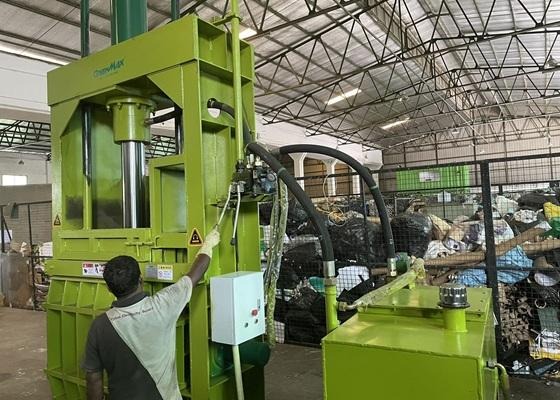
3. PET Bottle Washing and Recycling
For businesses producing recycled PET flakes, a dedicated washing line is required to remove labels, adhesives, dirt and other contaminants. Depending on the incoming material and required output quality, the process can include label removal, crushing, friction washing, hot washing, multi-stage rinsing, dewatering and drying.
GREENMAX provides PET bottle washing lines with capacities of approximately 1,000–3,000 kg/h. System configurations can be tailored to bottle quality, contamination levels and production targets, supporting both new recycling projects and upgrades to existing facilities.
A conventional washing line produces clean PET flakes rather than food-grade recycled PET resin. Additional processing and quality controls are required before the material can be used in food-contact applications.
For complete project requirements, GREENMAX can provide a tailor-made PET recycling solution.
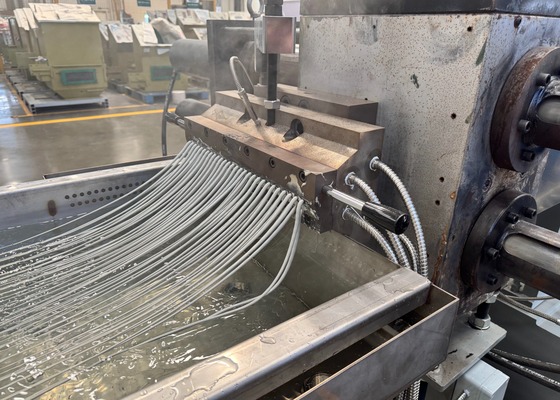
GREENMAX PET Recycling Equipment Solutions
From removing residual liquids and reducing packaging volume to baling collected bottles and producing clean PET flakes, GREENMAX provides equipment options for different stages of PET recycling.
The Poseidon Series is suitable for businesses handling liquid-filled or rejected beverage packaging. PET bottle balers support supermarkets, logistics facilities and recycling centres that need to compact loose bottles for storage and transport. For specialist recycling plants, PET washing systems provide the processing stages needed to convert collected bottles into clean flakes.
If your business is planning a PET recycling project or looking to upgrade existing dewatering, baling or washing equipment, contact GREENMAX with details of your material type, daily throughput, contamination level and target output. Our team can assess the operating requirements and recommend a suitable equipment configuration.