 Select Languange
 English
 Spanish
 Polish
 Japanese
 Italy
Italy
Expanded Polystyrene Recycling in the UK: How Businesses Can Recycle EPS Packaging
Yes, clean expanded polystyrene packaging can be recycled. The principal difficulty is not the polymer itself, but the volume of loose EPS, the space it occupies and the cost of transporting a material that is approximately 98% air. For businesses that generate EPS regularly, separating it at source and reducing its volume can turn an awkward waste stream into a practical recycling programme.
This guide explains which types of foam packaging are suitable for recycling, how the expanded polystyrene recycling process works in the UK, and when an on-site compactor or hot-melt densifier may be more effective than paying for repeated collections of loose material.
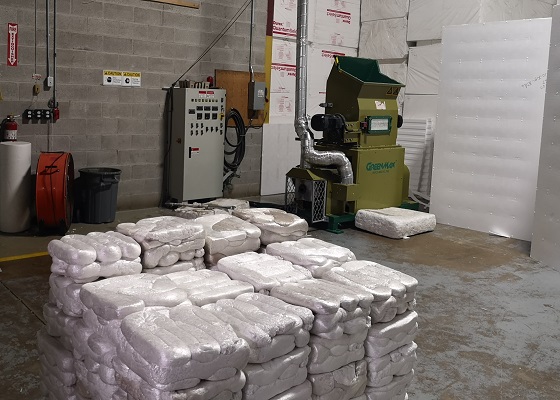
Clean EPS packaging can be sorted and densified at source before it is transported to a specialist reprocessor.
Can Foam Packaging Be Recycled in the UK?
Some foam packaging can be recycled, but the correct route depends on the polymer, cleanliness and local collection service. EPS used around appliances, electronics, furniture and other products is technically recyclable when it is kept clean and separated from tape, cardboard, labels and food residue.
It should not automatically be placed in a household or workplace mixed-recycling bin. In England, government guidance lists expanded and high-impact polystyrene packaging among the plastics that are not typically accepted in routine dry-recycling collections. A specialist collection, take-back scheme or on-site EPS recycling solution is therefore often required.
Common foam waste types and recommended recycling routes
|
Material or waste type |
Recyclability |
Recommended action |
|
Clean white EPS appliance or electronics packaging |
Usually suitable |
Remove tape and labels; store separately; compact or arrange specialist collection. |
|
Clean EPS fish boxes |
Often suitable |
Empty, drain and confirm the acceptable contamination level with the recycler. |
|
Food-soiled EPS trays or boxes |
Restricted |
Ask a specialist recycler; heavily contaminated material may be rejected. |
|
EPE or EPP protective foam |
Potentially suitable through a separate route |
Do not mix it with EPS unless the equipment supplier and material buyer approve the blend. |
|
PU upholstery foam or mixed unknown foam |
Not an EPS stream |
Identify the polymer and use a suitable specialist route. |
Why Is Expanded Polystyrene Difficult to Recycle?
EPS is a single-polymer material and can be mechanically recycled, but its physical form makes loose collection inefficient. According to the BPF EPS Group, a typical EPS box is around 98% air. This helps protect products with very little material, yet creates several operational problems a fter the packaging has served its purpose:
• High storage demand: loose pieces quickly fill cages, skips and warehouse areas.
• Low transport efficiency: a vehicle can reach its volume limit while carrying relatively little EPS by weight.
• Contamination risk: tape, labels, cardboard, food residue and other polymers can reduce the value of the recovered material.
• Fragmentation: lightweight pieces can break apart and escape if they are stored outdoors or handled poorly.
• Uneven collection access: specialist EPS services vary by region, volume and material quality.
These are logistics and collection challenges rather than proof that EPS cannot be recycled. The commercial solution is to keep the material clean and make it dense enough to store and transport efficiently.
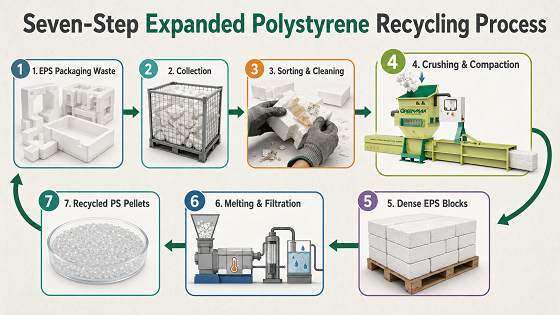
How Expanded Polystyrene Recycling Works
A well-managed commercial EPS packaging recycling programme normally follows seven steps:
1. Collect: place clean EPS packaging in a dedicated cage, bag or enclosed storage area.
2. Sort: keep EPS separate from EPE, EPP, PU foam and other plastics.
3. Decontaminate: remove tape, labels, cardboard, metal and excessive moisture or food residue.
4. Reduce size: crush the bulky foam into smaller pieces for stable, continuous feeding.
5. Compact or melt: use cold compression or controlled hot melting to create dense blocks or ingots.
6. Transport and reprocess: move the densified material to a recycler for granulation, filtration and pelletising.
7. Manufacture new products: recycled polystyrene can be used in applications such as XPS insulation, mouldings and other plastic products, subject to the required material specification.
UK Recycling Rules and Business Responsibilities
Businesses should separate the operational question of how to recycle EPS from their legal packaging and waste obligations. The UK's extended producer responsibility for packaging framework includes registration, data reporting, recyclability assessment, fees and recycling obligations for organisations that meet the relevant criteria. Companies should review the current official EPR for packaging guidance or obtain professional compliance advice for their circumstances.
In England, workplace recycling requirements changed on 31 March 2025, with a temporary extension for eligible micro-firms until 31 March 2027. The Simpler Recycling workplace guidance requires businesses to separate specified waste streams, but it also states that polystyrene packaging is not typically collected with routine dry recycling. This is why a dedicated EPS collector or on-site densification system may still be needed.
Waste rules and collection arrangements are not identical across England, Scotland, Wales and Northern Ireland. Always confirm the applicable regional requirements, duty-of-care documentation and acceptance criteria with an authorised waste contractor or recycler.
The BPF EPS Group reports a UK EPS packaging recycling rate of 66%, citing 2023 industry data. It also notes that commercial waste streams with large, consistent volumes are especially suitable for EPS recycling. The opportunity for businesses is therefore to improve separation and logistics rather than treating every piece of EPS as residual waste.
On-Site EPS Recycling Solutions for UK Businesses
When a business generates clean EPS every week, reducing the material's volume before collection can improve the economics of the whole programme. GREENMAX offers two main routes for on-site expanded polystyrene recycling.
GREENMAX APOLO Cold Compactor
The GREENMAX APOLO cold compactor crushes EPS and compresses it mechanically without melting the polymer. Depending on the material and operating conditions, the volume can be reduced by up to approximately 50:1. Cold compaction is often suitable for clean packaging waste, EPS fish boxes and businesses that prefer a lower-temperature process.
GREENMAX MARS Hot-Melt Densifier
The GREENMAX MARS hot-melt densifier combines crushing, controlled heating and extrusion. It can reduce EPS volume by up to approximately 90:1 and produces dense ingots that are easy to stack. A hot-melt route may suit sites that need the highest possible volume reduction and can operate the equipment with the required ventilation, safety controls and electrical supply.
Cold compaction and hot-melt densification at a glance
|
Selection factor |
APOLO cold compactor |
MARS hot-melt densifier |
|
Process |
Mechanical screw compression |
Crushing, controlled melting and extrusion |
|
Indicative volume reduction |
Up to approximately 50:1 |
Up to approximately 90:1 |
|
Output |
Dense compressed blocks |
Solid melted ingots |
|
Typical priority |
Physical compaction, lower-temperature operation |
Maximum volume reduction and compact storage |
|
Final selection |
Confirm material, hourly volume, moisture, site layout, power supply and buyer specification before choosing a model. |
|
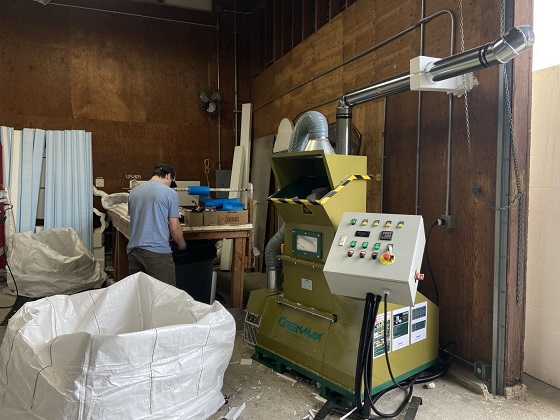
Which Businesses Can Benefit from an EPS Compactor?
On-site equipment is most relevant where bulky packaging is generated consistently and loose collections are taking up valuable space.
Small or occasional generators may be better served by a local collection scheme. The case for machinery becomes stronger when a site pays frequently for skip exchanges, dedicates excessive floor space to loose foam or can aggregate EPS from several branches at one hub.
From Waste Cost to Recyclable Material Value
Densification does more than make a warehouse look tidier. It changes how EPS can be handled as a commercial material.
Recovered material value is not fixed. It depends on polymer purity, colour, contamination, density, bale or block quality, quantity, location and market conditions. GREENMAX can review potential buy-back or offtake support for compacted EPS subject to these factors. Businesses should request a current assessment rather than relying on historic price claims.
Should You Use a Collection Service or Install a Compactor?
Practical route by EPS generation pattern
|
EPS generation pattern |
Suggested starting point |
|
Small, occasional quantities |
Check a local specialist recycler, supplier take-back service or household recycling centre. |
|
Regular moderate volume at one site |
Compare collection costs with a small cold compactor or hot-melt machine. |
|
Large weekly volume |
Assess on-site densification using actual kg/hour and storage data. |
|
Several stores or warehouses |
Consider backhauling clean EPS to a central hub for densification. |
|
Mixed or contaminated foam |
Run a material test and confirm buyer acceptance before investing. |
Information Needed for an EPS Recycling Assessment
To recommend a suitable solution, GREENMAX needs more than an estimate such as “several cages per week”. Send the following information:
• clear photographs of the loose EPS and any contamination;
• estimated kilograms per day, week or month;
• the source of the packaging, such as appliances, seafood or manufacturing;
• current storage method, collection frequency and waste cost;
• site postcode, available floor space and feeding arrangement;
• available electrical supply and preferred operating hours; and
• whether the site requires material buy-back or offtake support.
GREENMAX can then compare an individual machine with a wider EPS recycling system, estimate the required capacity and discuss the expected output specification.
Frequently Asked Questions
Can expanded polystyrene be recycled in the UK?
Yes. Clean, separated EPS can be mechanically recycled through a specialist route. Routine household and workplace recycling services do not always accept it, so check the local service or use a dedicated commercial solution.
Can foam packaging go into a household recycling bin?
Not automatically. Acceptance varies by council and polymer type. Expanded polystyrene packaging is commonly excluded from mixed kerbside recycling, so check the local authority's current instructions.
Is polystyrene packaging recyclable?
EPS packaging is technically recyclable when it is correctly identified, clean and accepted by a suitable reprocessor. Food residue, tape, labels and mixed polymers can limit acceptance.
How should a business recycle large quantities of EPS?
Separate EPS at source, remove contaminants and compare specialist collection with on-site volume reduction. A compactor or densifier can make regular high-volume streams more economical to store and transport.
What is the difference between an EPS compactor and a densifier?
A cold compactor uses mechanical compression to produce dense blocks. A hot-melt densifier heats and extrudes the foam into solid ingots, normally achieving a higher volume-reduction ratio.
What happens to EPS after it is recycled?
Compacted blocks or ingots are transported to a reprocessor, where the material can be granulated, filtered and pelletised. The recycled polystyrene may then be used in products such as XPS insulation and plastic mouldings.
Can contaminated EPS packaging be recycled?
It depends on the type and degree of contamination. Light tape or labels may be removable, while food, chemicals, water and mixed plastics may require pre-treatment or lead to rejection. Send photographs and samples for assessment.
Does GREENMAX buy back compacted EPS blocks?
GREENMAX can assess buy-back or offtake options according to material purity, output form, quantity, location and current market conditions. Approval and pricing are confirmed case by case.
Turn Bulky EPS Packaging into a Manageable Recycling Stream
Send GREENMAX photographs of your EPS, estimated weekly volume, site postcode and current collection method. We will assess the material, compare cold compaction with hot-melt densification and discuss whether buy-back support is available.
Contact GREENMAX for an EPS recycling assessment
Policy note: regulatory information is provided as general background and should not be treated as legal advice. Check current government guidance and regional waste requirements before changing compliance procedures.