 Select Languange
 English
 Spanish
 Polish
 Japanese
 Italy
How to Handle Out-of-Date Drinks and Packaging Waste in the UK
UK beverage manufacturers, supermarkets and food processing businesses generate out-of-date drinks, damaged packaging and rejected products during production, sales and warehousing. These items often still contain a considerable amount of liquid. Disposing of them as ordinary solid waste can increase transportation weight and cause liquid leakage and packaging contamination, making subsequent storage and recycling more difficult.
The UK beverage industry is also paying increasing attention to packaging recovery costs and regulatory changes. On 28 October 2026, the British Soft Drinks Association (BSDA) called for a review of Packaging Recovery Notes (PRNs), Plastic Packaging Tax (PPT), Extended Producer Responsibility (EPR) and the Deposit Return Scheme (DRS). The association highlighted the growing compliance costs facing beverage manufacturers, retailers and food service businesses as these different mechanisms overlap. Against this background, managing out-of-date drinks and packaging waste more efficiently has become an important operational consideration.
For businesses handling this type of waste, the challenge is not limited to disposing of the liquid contents. Packaging also needs to be drained, compacted and prepared for further recycling. Even empty beverage bottles and other plastic containers can take up considerable storage space, making mechanical compaction a practical option for collection and transportation.
Where Do Out-of-Date Drinks and Packaging Waste Come From?
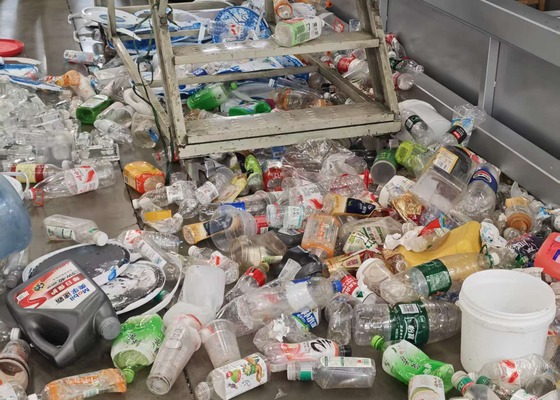
Beverage waste is generated across manufacturing, retail and warehousing operations. For beverage manufacturers, rejected products may result from filling errors, defective seals, incorrect labelling or failed quality inspections. These products often need to be isolated, and many still contain liquid inside their original packaging.
Supermarkets and large retail distribution centres face different challenges. Expired stock, damaged packaging, products affected during transportation and inventory adjustments can all result in batches of unwanted bottled drinks, canned beverages and other packaged products. For large warehouses, these items can accumulate quickly and occupy valuable temporary storage space.
Unlike empty packaging, containers holding residual liquids require additional handling. Compressing them directly or mixing them with other plastic waste can cause leakage and contaminate recyclable materials. Even when containers have already been emptied, their original size can still create storage and transportation difficulties. Businesses therefore need to choose an appropriate handling method based on the condition of the packaging.
Managing Out-of-Date Drinks and Their Packaging
When dealing with out-of-date drinks, businesses should first consider whether the products have any remaining recovery or reuse value. Under the UK's food and drink waste hierarchy, products that remain suitable for human consumption should be considered for redistribution first. Products unsuitable for human consumption may have other potential uses, subject to relevant food safety and regulatory requirements. Drinks that cannot be reused should be sent to an appropriate waste treatment provider.
Coca-Cola Europacific Partners (CCEP), a major beverage business operating in the UK, outlined its approach to food loss and waste management in a report published in 2024. Products that remain suitable for human consumption are prioritised for donation to charities. Products unsuitable for human consumption but meeting relevant requirements may be considered for alternative uses, while those that cannot be recovered through these routes are sent to specialist waste management providers. For rejected drinks in their original packaging, separating the liquid contents from the packaging is also an important part of subsequent handling.
This approach helps avoid treating the contents and packaging as a single waste stream. The drinks themselves need to follow an appropriate treatment route, while plastic bottles, metal cans and composite packaging should be sorted according to their material types. Once the initial separation and classification have been completed, the packaging can move on to dewatering, compaction and further recycling.
GREENMAX P-C Series: Dewatering and Compaction for Liquid Packaging
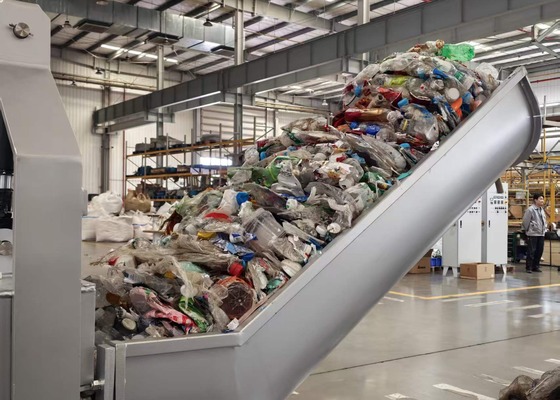
After products have been sorted, packaging containing residual liquids needs suitable treatment. For manufacturers and specialist recyclers handling regular volumes of rejected beverage packaging, manually emptying and sorting individual containers can be time-consuming and difficult to manage at scale. Mechanical dewatering and compaction equipment provides a more efficient way to process suitable packaging, reducing manual handling while limiting the impact of residual liquids on subsequent storage and transportation.
The GREENMAX Poseidon P-C Series uses a screw compression system to process packaging and reduce its volume. For containers that still hold liquid, the machine separates the residual contents during compression and directs the recovered liquid into a dedicated collection system. Containers that have already been emptied can also be compressed directly, reducing their volume for easier collection, storage and transportation. This means the P-C Series is suitable not only for liquid-filled beverage packaging but also for other compatible empty plastic containers that require volume reduction.
GREENMAX offers three models in the Poseidon range: P-C200, P-C350 and P-C900. The P-C200 is designed for routine dewatering and compaction requirements involving suitable packaging. The P-C350 is intended for medium-scale processing and, depending on the material, can handle PET bottles, aluminium cans, beverage cartons and yoghurt cups. The P-C900 features a larger feeding opening and compression chamber, allowing it to process standard beverage bottles as well as larger containers used for detergents and personal care products.
The three models can be selected according to hourly throughput, packaging dimensions, residual liquid content and available installation space. The P-C200 or P-C350 may be suitable for businesses handling relatively consistent packaging sizes, while the P-C900 can be considered for operations dealing with larger bottles, mixed container sizes or bulkier packaging. The final equipment selection should be based on the actual material and processing requirements.
For beverage manufacturers, retail distribution centres and packaging recyclers, this approach reduces the need for repeated manual emptying and sorting while improving storage and transportation efficiency. Businesses can choose between dewatering and compaction or direct compaction, depending on the condition of the incoming packaging.
For more information about the equipment, see the GREENMAX Dewatering Compactor and explore the Poseidon P-C Series.
What Happens to Beverage Packaging After Dewatering?
Once liquid has been separated and the packaging has been compacted, further processing depends on the material type and the intended recycling route. For PET beverage bottles, the processed packaging can be sent to a specialist recycling facility for further treatment. A typical PET bottle recycling process may include label removal, shredding, washing, separation and mechanical drying to produce clean PET flakes. These flakes can then be used for further extrusion and pelletising, depending on the requirements of the downstream processor.
For businesses planning further treatment, a PET bottle recycling line or plastic washing line can be considered according to the material type and required output quality. These processes are carried out after the initial dewatering and compaction stage and do not need to be part of every beverage waste management operation.
HDPE bottles, aluminium cans and other packaging materials require their own sorting and recycling processes. Different materials should not be mixed indiscriminately, as this can affect the quality of the recovered material. Establishing reliable downstream recycling partnerships is equally important for beverage manufacturers and large retailers. After dewatering and compaction, businesses still need to determine who will collect the packaging, how it will be transported and which recycling facility will process it.
The UK's packaging recovery system is also changing. The Deposit Return Scheme (DRS) is scheduled to launch in October 2027, covering eligible drinks containers such as PET bottles and metal cans. Businesses handling beverage packaging therefore need to understand which containers fall within the scheme and how other commercial packaging waste should be managed.
For businesses that primarily need to handle liquid-filled packaging, a dewatering and compaction machine may be sufficient for the initial processing stage. Empty containers that still occupy considerable space can also benefit from direct compaction. Specialist recyclers with a stable supply of suitable materials and the capacity for further processing can add subsequent stages such as label removal, shredding, washing and pelletising.
GREENMAX P-C900 dewatering Video:
GREENMAX Beverage Packaging Dewatering Applications
The GREENMAX Poseidon Series provides beverage manufacturers, retailers and specialist recyclers with different equipment options for liquid packaging dewatering and compaction. The P-C200, P-C350 and P-C900 can be selected according to packaging type, processing volume and site conditions, helping businesses separate residual liquids and reduce packaging volume. They can also be used to compact suitable packaging that has already been emptied.
The CSG Blackburn project in the UK provides a practical reference for handling packaging containing residual liquids. The company uses a GREENMAX P-C350 dewatering compactor to process liquid-contaminated packaging. Mechanical dewatering and compaction help improve the efficiency of its material handling process. Although this project does not involve beverage packaging, it demonstrates how the P-C350 can be used to prepare liquid-containing packaging for further recycling and integrated into an existing waste management operation.
For beverage manufacturers, food processing businesses and retail distribution centres, equipment suitability needs to be assessed according to container material, structure, residual liquid content and actual operating conditions. GREENMAX can help evaluate whether the P-C200, P-C350 or P-C900 is suitable based on bottle dimensions, liquid type, daily processing volume and available site space.
From sorting rejected products to dewatering packaging and preparing materials for further recycling, beverage waste management involves several connected stages. By selecting an appropriate treatment route for liquid contents, choosing a suitable GREENMAX Poseidon dewatering and compaction machine, and establishing reliable downstream recycling channels, businesses can reduce the handling difficulties associated with residual liquids, improve packaging collection and transportation efficiency, and give recyclable packaging a route back into material recovery.