 Select Languange
 English
 Spanish
 Polish
 Japanese
 Italy
Italy
How to Handle Contaminated EPS Packaging Before Recycling
EPS packaging is widely used for appliances, electronics, furniture and cold-chain products. Although much of it is relatively clean when unpacked, tape, labels, moisture and other contaminants can make recycling more difficult.
Lightly contaminated EPS may still be recyclable if the material can be cleaned and meets the recycler’s acceptance requirements.
Sort EPS Early
Clean EPS should be separated from cardboard, plastic film, liquids and general waste as soon as possible. Warehouses and distribution centres can use dedicated collection points near unpacking areas to reduce secondary contamination.
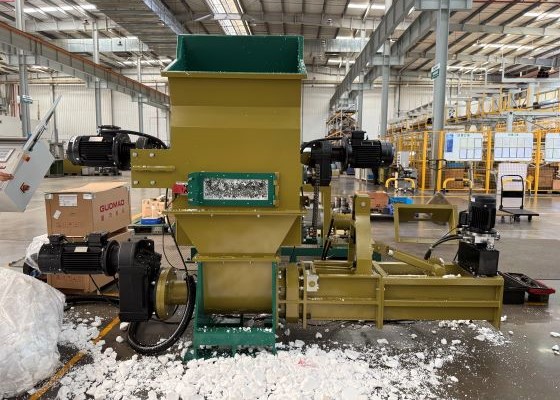
This also applies to EPS manufacturers. Guatemalan producer ARQUIPOR keeps production offcuts separate from general waste and processes them with a GREENMAX M-C200 EPS densifier. This shows how separating clean EPS at source can make downstream recycling easier.
Remove Obvious Contamination
Before processing, businesses should remove large labels, plastic film, metal parts and other non-EPS materials where practical.
Wet EPS should be allowed to drain or dry before storage or compaction. Small amounts of tape or labels may be acceptable to some recyclers, while food residue, oil, mixed plastics or excessive moisture can make recycling more difficult.
Check Recycler Requirements
Recycler requirements can vary, so businesses should confirm acceptable contamination levels, preferred material form and minimum collection quantities before processing.
Where businesses are unsure whether their EPS is suitable for compaction, GREENMAX can help assess the material condition, waste volume and downstream requirements before a suitable handling or compaction approach is selected.