
 Select Languange
 English
 Spanish
 Polish
 Japanese
 Italy
EPS Insulation Recycling in the UK: How Should Waste from Demolition and Refurbishment Be Handled?
EPS insulation waste does not only come from insulation manufacturers. External wall refurbishment, energy-efficiency upgrades and demolition work across the UK can also generate EPS insulation that has been installed in buildings for many years. Unlike clean factory offcuts, insulation removed from a building may have render, adhesive, mortar or fixings attached, while the age of the material can also affect how it needs to be handled.
For demolition contractors and construction waste operators looking at EPS insulation recycling in the UK, the first step is to establish what type of insulation has been removed, its condition and whether older material may contain a restricted flame retardant. These checks help determine which EPS can be separated for recycling and which material requires a different waste route.
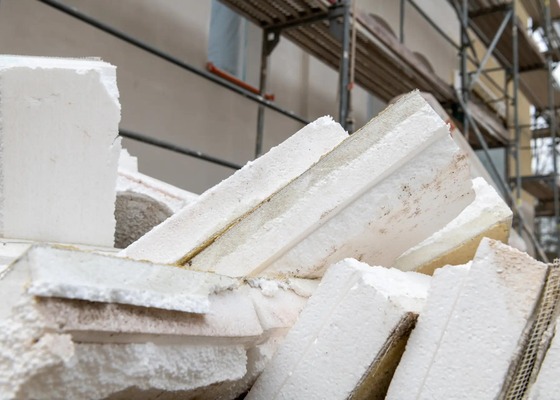
Older EPS Insulation May Need to Be Checked for HBCD
A demolition or strip-out project may encounter several insulation materials, including EPS, XPS, PU/PIR and mineral wool. Identifying the material is the starting point. Once it has been confirmed as EPS, boards can be checked for mortar, adhesive, render, metal fixings and other residues, with cleaning and separation carried out according to their condition.
Older EPS insulation presents an additional issue that cannot be identified reliably by appearance alone: HBCD (hexabromocyclododecane). The British Plastics Federation's Expanded Polystyrene Group states that HBCD was used as a flame retardant in some EPS insulation boards and blocks produced from the 1970s onwards. It also notes that colour, size and thickness are not reliable ways of identifying affected material.
According to the BPF, EPS products installed in buildings after mid-2017 can be assumed to be HBCD-free. For material removed from older buildings, records or testing may be needed to establish whether HBCD is present. Surface cleaning will not address this issue, so the age and available records for older insulation need to be considered separately from visible contamination.
How Was EPS Insulation Recycled at Eyot House in London?
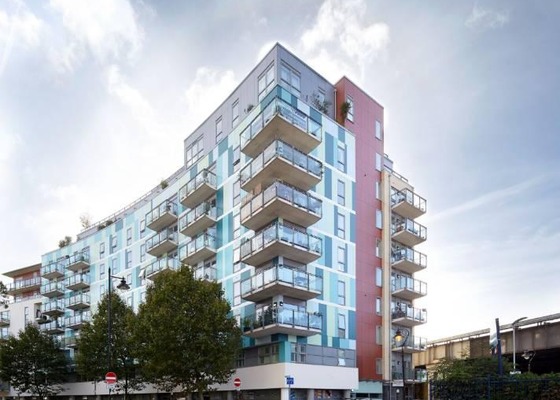
A refurbishment project at Eyot House in Bermondsey, London provides a practical example of polystyrene insulation recycling during external wall works.
When ENGIE was contracted to replace the building's cladding, EPS boards from the existing external wall insulation system had to be removed. The recovered boards contained render residue, so operatives cleaned as much of the material as possible by hand before bagging it for collection.
The EPS was then sent to S & B EPS. At the recycling facility, the material was sorted and checked for contamination before being ground back into bead form. The recovered material could then be used in lower-grade EPS products such as packaging. In total, 150 m³ of EPS board was recycled, representing 80% of the EPS removed from the building.
What Happens When the Volume of EPS Starts to Increase?
EPS insulation is lightweight but extremely bulky. A small quantity can be bagged and stored for collection, but a large refurbishment project — or a business handling waste from several sites — can quickly accumulate significant volumes of loose boards.
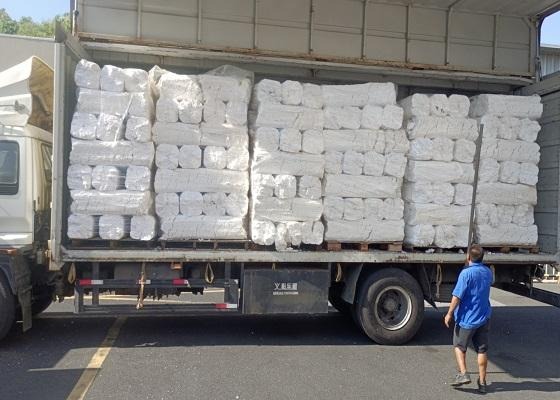
A 2023 project in Bristol provides a useful comparison. A construction company had completed the refurbishment of a tower block and needed to recycle more than four tonnes of EPS in briquette form. Plastic Expert collected the entire quantity on one lorry. The contractor also had two further blocks to strip and expected additional EPS from future projects.
For projects generating EPS only occasionally, segregating the material and arranging collection may be sufficient. Construction waste sites, specialist recyclers and contractors working across a series of refurbishment projects face a different situation. Once loose EPS begins taking up substantial storage space or requiring frequent collections, reducing its volume before transport becomes a practical option.
This is where EPS recycling moves beyond segregation and collection and starts to involve on-site or centralised processing.
Should EPS Be Compacted on Site or at a Central Facility?
Volume reduction does not necessarily have to take place on the demolition site. Individual projects have defined construction programmes, and the amount of EPS generated can vary as work progresses. Installing fixed equipment at every site may therefore result in relatively limited operating time.
Construction waste operators or specialist recyclers receiving EPS from several projects can instead process it at a central facility. Contractors segregate and collect the material on site, while larger boards can be size-reduced and compacted once they arrive at the processing facility. One EPS recycling system can then handle material collected from a number of projects.
For a large refurbishment or demolition project generating substantial quantities of EPS over a short period, on-site processing may still be worth assessing. Available space, power supply, daily volumes, project duration and haulage distance all influence whether the equipment is better located on site or at a central facility.
The size of the incoming material also matters. Full-size insulation boards may require shredding before volume reduction. Where EPS construction waste is received regularly, the capacity of the shredder, feeding system and volume-reduction equipment should reflect the actual incoming volume so that loose boards do not accumulate around the processing area.
How Should Equipment Be Configured for a Regular Stream of Construction EPS?
For demolition contractors, much of the work takes place at the front end: identifying the insulation, separating it during strip-out and organising collection. Construction waste operators and specialist recyclers receiving larger and more consistent volumes also need to consider shredding, volume reduction, storage and onward transport.
Where whole insulation boards arrive at a processing site, they can be size-reduced before entering an EPS compactor or EPS densifier. Cold compaction uses mechanical pressure to turn loose EPS into compacted blocks, while hot-melt densification produces a denser ingot. The appropriate approach depends on the condition and size of the incoming material, typical processing volume, available storage space and transport arrangements.
The two UK projects show how these requirements can vary. At Eyot House, EPS was cleaned on site before being sent to a specialist recycler for sorting and grinding. In the Bristol refurbishment project, more than four tonnes of EPS had already been briquetted before being collected in a single lorry load.
For waste operators receiving construction EPS on a regular basis, GREENMAX can configure shredding and volume-reduction equipment around the size and condition of the incoming insulation, typical throughput, available site space and transport requirements. The equipment can then be matched to the way EPS is actually collected and handled across the business.