
 Select Languange
 English
 Spanish
 Polish
 Japanese
 Italy
EPS Compactor Repair, Upgrade or Replacement | Polystyrene Recycling UK
For UK recyclers, a problem with an EPS compactor rarely stops at the repair bill. Downtime can quickly leave loose polystyrene accumulating on site, put pressure on storage space and disrupt planned collections. For a business that relies on regular compaction as part of its polystyrene recycling operation, repeated equipment problems can affect the whole material-handling process.
When an EPS compactor has been running for many years, the question is therefore not simply whether it can still be repaired. The more useful starting point is to identify what is affecting its performance and whether maintenance, a targeted upgrade or replacement will provide a reliable solution.
A UK pharmaceutical waste management case published in 2026 provides a useful example. After repeated compactor failures increased the risk of operational disruption, the business chose to replace the equipment before a complete breakdown and reviewed its waste segregation and logistics arrangements at the same time. The case highlights a practical point for recycling operations: replacement planning does not have to begin only after a machine has stopped working altogether.
When Should an Existing EPS Compactor Be Reassessed?
The age of a machine alone does not determine whether it should be replaced. What matters more is whether it can still process the current EPS stream consistently and whether recurring problems can be resolved through practical polystyrene compactor maintenance.
Poor block formation or inconsistent discharge. If compacted EPS blocks are becoming loose, breaking apart or being discharged inconsistently, the screw, compression section, machine settings and condition of the incoming material should be checked. With a cold compactor, material softening, sticking, jamming or uneven feeding can also interfere with stable operation. If adjustment or repair restores normal block formation, there may be little reason to replace the machine. If the same problem keeps returning after troubleshooting, the condition of the main compaction unit needs closer investigation.
Serious wear to the screw or other key components. A heavily worn or damaged screw can involve substantial costs for replacement parts, dismantling, labour and recommissioning. If other major components are also approaching the end of their service life, the latest repair quotation should not be considered in isolation. Recyclers also need to consider how reliable the machine is likely to be after the repair and whether further downtime is likely to follow.
Frequent faults despite repeated repairs. Some older compactors are technically still operational but suffer from recurring alarms, stoppages, sticking or jamming. Each repair may get the machine running again, only for the same fault to return. For a site processing EPS every day, this can interrupt the flow from loose foam collection through compaction and onward polystyrene recycling. Maintenance history and lost operating time can therefore be just as important as the cost of the individual repair.
Changes in the waste stream should also be considered. Equipment selected several years ago may still be mechanically sound but no longer match the volume, material mix or working practices of the site.
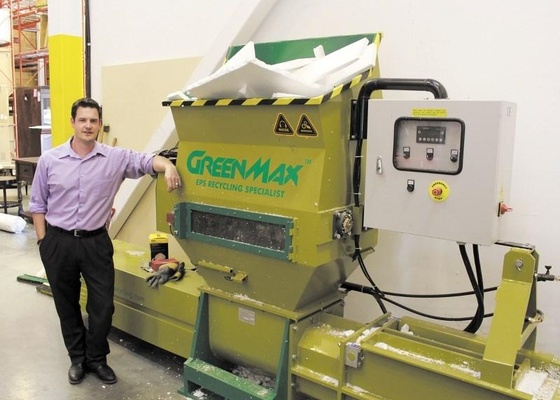
When Can an Existing Polystyrene Compactor Be Upgraded?
If the main compactor remains reliable and the bottleneck is mainly in feeding, size reduction, conveying or discharge, replacing the whole machine may be unnecessary. A targeted polystyrene compactor upgrade can improve the part of the process that is actually restricting throughput.
Where staff are repeatedly carrying bulky EPS to the machine, for example, a conveyor can improve feeding and reduce manual handling. Large packaging pieces that are awkward to feed can be reduced in size by a separate foam shredder before they reach the compactor. If the existing crushing arrangement no longer suits the incoming material, the blade configuration can also be reviewed. Depending on the machine and discharge arrangement, automatic cutting may reduce the amount of manual work required after compaction.
The same principle applies when EPS volumes increase. A rise in throughput does not automatically mean that the existing compactor has to be removed.
For sites handling large or concentrated volumes of loose foam, crushed EPS can first enter a silo and then be distributed to multiple compactors. GREENMAX has developed a system using one silo feeding three compactors, allowing a shared front-end storage and feeding arrangement to support greater overall capacity. The number of compactors can be configured around the site's throughput rather than being limited to a fixed three-machine arrangement.
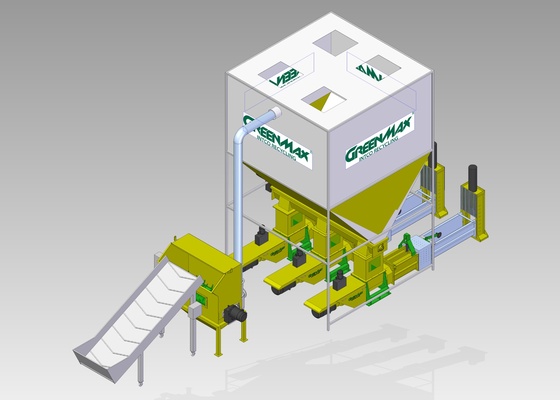
This provides a different route to expansion. If the existing compaction method still suits the material, the current machine may be able to remain within a larger system while additional feeding, storage or compaction capacity is introduced.
There are, however, limits to what an upgrade can achieve. A conveyor solves a feeding problem. A separate shredder addresses oversized material. A silo and multiple compactors help manage higher material flow and throughput. None of these additions will solve serious mechanical damage or a recurring fault within the main compactor itself.
When Does EPS Compactor Replacement Make More Sense?
Replacement becomes more relevant when repeated repairs are no longer providing a dependable machine. A severely damaged screw, for example, may require a costly overhaul while other major components are already ageing. Similarly, a compactor that continues to produce poor blocks or suffers repeated sticking and jamming despite several rounds of adjustment may create more disruption than its repair cost alone suggests.
An EPS compactor replacement can also be driven by changes in the waste stream rather than equipment failure.
A recycler may originally have handled predominantly EPS and selected the machine around that material. If the business later receives a much larger proportion of EPE or another foam type, the original machine may continue to run but no longer be the right equipment for the material now arriving on site.
Site priorities can change as well. Some businesses may want to avoid a thermal densification process or reduce the energy associated with heating and therefore reconsider cold compaction. Others may place greater importance on achieving a denser output for storage and transport. In either case, the existing machine should be judged against the site's current foam recycling requirements rather than the conditions under which it was originally purchased.
The key question is therefore not simply, “Can this machine still run?” It is whether the machine can continue to handle the expected material, throughput and working conditions reliably enough to support the site's polystyrene recycling operation.
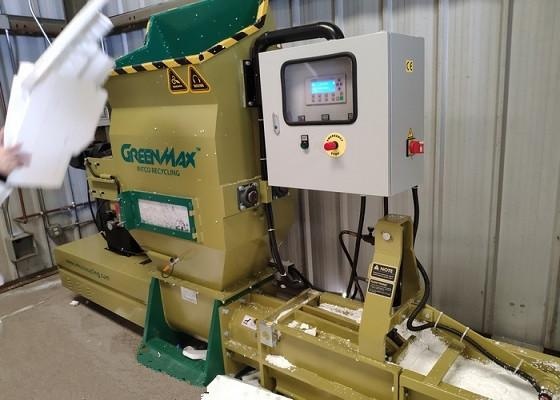
Planning the Next Step for an Existing EPS Compactor
If an EPS compactor is suffering from recurring faults, poor block formation or insufficient capacity, or if the incoming foam stream has changed, a useful assessment starts with the machine model, recent throughput, maintenance history, photographs of the material and a clear description of the operating problem.
GREENMAX can use this information to consider whether maintenance, a targeted upgrade, capacity expansion or equipment replacement is the more practical route. Depending on the bottleneck, this may involve conveying, separate shredding, automatic cutting or a silo-fed multi-compactor arrangement. If the main machine is no longer reliable or no longer suits the material, a different equipment configuration can then be considered.
The aim is not simply to replace an older machine. It is to remove the problem that is limiting the current EPS recycling process while allowing the system to accommodate future changes in material volume and composition.