
 Select Languange
 English
 Spanish
 Polish
 Japanese
 Italy
Italy
When Does On-Site EPS Densification Make Sense for UK Distribution Centres?
UK retail, e-commerce, appliance and furniture distribution centres often generate significant amounts of EPS packaging waste. At larger facilities, where products are unpacked in volume, lightweight EPS can quickly take up valuable space in back-of-house and waste storage areas.
According to the British Plastics Federation (BPF), around 66% of EPS packaging waste in the UK was recycled in 2023. For businesses generating large volumes of EPS packaging, the practical challenge is therefore not only whether the material can be recycled, but also how it can be collected efficiently and directed into existing recycling channels.
For UK distribution centres, this raises an important question: is enough EPS being generated on site to justify setting up a dedicated densification process?
Which Distribution Centres Generate Large Volumes of EPS Waste?
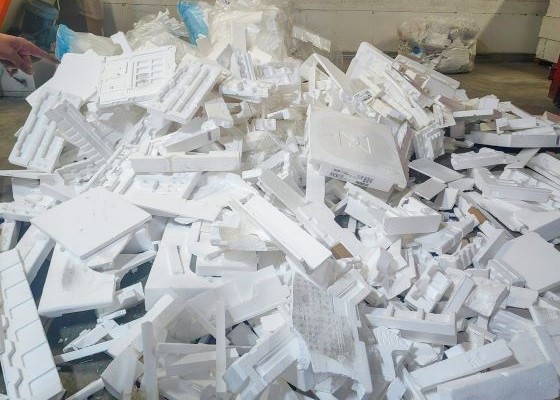
EPS waste is common at appliance, electronics, furniture, retail and e-commerce distribution centres where protective packaging is removed regularly.
When deciding whether on-site densification is worthwhile, businesses should look at long-term waste volume and how frequently EPS is generated.
When Should On-Site EPS Densification Be Considered?
Densification is more suitable when loose EPS takes up significant storage space, requires frequent collections and can be separated consistently.
Businesses should also confirm recycler requirements for contamination, collection quantities and accepted material form before investing in equipment.
How Can Distribution Centres Handle EPS On Site?
EPS should be separated from cardboard, plastic film and general waste, then moved to a designated processing area.
After densification, the material is easier to store and transport. For larger sites, collection points and equipment location should also be planned to reduce unnecessary internal handling.
Choose an EPS Handling Approach Based on Actual Waste Conditions
Every distribution centre has different EPS volumes, waste forms, space constraints and recycling options. Whether on-site densification is necessary, and what processing capacity is appropriate, should therefore be determined by actual operating conditions.
GREENMAX can assess waste size and form, density, waste volumes, available space, collection arrangements and downstream recycling requirements to evaluate on-site densification needs and recommend an appropriate EPS handling and densification approach.