 Select Languange
 English
 Spanish
 Polish
 Japanese
 Italy
Italy
How Retailers Can Turn Cardboard & Plastic Recycling into Real Cost Savings
In retail back-of-house areas, the biggest “hidden cost” in waste is rarely the disposal fee alone. It’s the labour time spent flattening boxes, overflowing cages, extra collections, and the floor space lost to loose packaging.
The good news: cardboard (OCC) and many plastics are valuable recyclables—but only when they’re handled efficiently and prepared to a standard recyclers can collect and grade consistently.
A fully automatic horizontal baler is one of the fastest ways to turn daily packaging waste into predictable savings and a cleaner, safer stockroom.
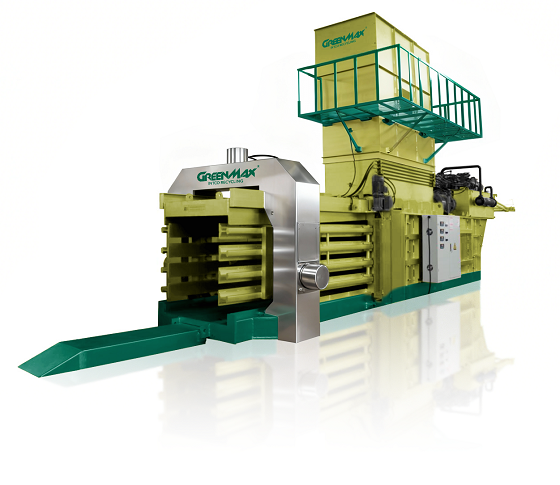
Turning loose packaging into value (not clutter)
Retail sites generate two high-volume streams every day:
Cardboard / OCC from deliveries and replenishment
Plastic film & soft plastics from wrapping, pallets, and inbound packaging
When these materials stay loose, you pay in three ways: storage space, staff time, and collections. When they’re baled into dense, uniform bales, they become sale-ready commodities that are simpler to store, stack, and collect.
Why a GREENMAX fully automatic horizontal baler fits retail operations
A manual or semi-automatic process often breaks down in retail because teams are busy and turnover is real. The advantage of going fully automatic is consistency: feed material in, let the baler handle compression and tying automatically.
GREENMAX Automatic Horizontal Balers are designed for:
- Fully automatic continuous baling
- Automatic wire tying to reduce manual handling
- PLC control with real-time process monitoring
- Consistent, dense bale output for easier transport and better handling
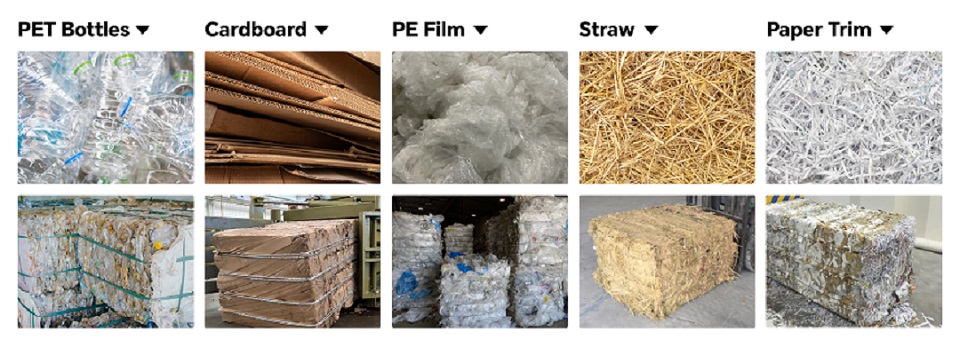
What materials can you bale?
GREENMAX lists broad material compatibility, including:
- Cardboard / OCC
- Paper & packaging waste
- Plastic films & soft plastics
- PET bottles
- General industrial waste
That matters for retail groups that want one baler platform across multiple sites—even when each site’s waste mix varies.
Where the savings actually come from
1) Fewer collections and better storage control
Dense bales are easy to store and schedule for pickup. Instead of frequent ad-hoc collections for loose packaging, you move to planned collections of compact bales.
2) Lower labour cost per tonne processed
A key benefit of auto-tie systems is removing repetitive manual steps. GREENMAX’s automatic threading and wire tying system is designed to complete tying without manual wire feeding, reducing operator involvement and improving safety
3) Cleaner, safer back-of-house areas
Baling reduces loose piles, tripping hazards, and overflowing cages—helping stockrooms stay operational during peak delivery cycles.
Choosing the right size for your retail footprint
If you operate a distribution centre, supermarket, or big-box retail format, sizing should match daily volume, material type, and labour availability.
GREENMAX publishes multiple automatic models with different press forces, motor power, and throughput ranges (e.g., GMHB-A series), which allows scaling from moderate back-of-house volume to high-output operations
Practical sizing rule:
If your team is constantly “catching up” on cardboard and film, you’re usually past the point where a small vertical baler is optimal—continuous-feed horizontal baling tends to fit better.
Sustainability that supports the bottom line
Retailers are under pressure to report improvements in recycling rates and waste diversion. Baling helps because it:
- Increases capture rate (less contamination, fewer “overflow” mistakes)
- Improves downstream recycling efficiency (consistent bale quality)
- Supports measurable waste diversion and ESG reporting (by weight and pickup records)
FAQ
Is a fully automatic horizontal baler worth it for retail?
If you’re generating high daily volumes of cardboard and plastic, the combination of labour reduction, better storage control, and fewer collection disruptions typically drives payback.
What makes “auto-tie” different from semi-automatic baling?
Auto-tie systems remove manual wire threading and reduce operator involvement during tying, improving safety and consistency.
Can one baler handle both cardboard and plastic film?
Yes—GREENMAX positions its automatic horizontal baler for cardboard/OCC and plastic films/soft plastics, among other materials.
What sites benefit most?
High-volume environments such as warehouses, distribution centres, and retail back-of-house areas are specifically listed as common applications.