
 Select Languange
 English
 Spanish
 Polish
 Japanese
 Italy
Italy
Package PE Foam Recycling in the UK Automotive Industry: A Practical Solution for Bulky Packaging Waste
Package PE foam is widely used across the UK automotive supply chain. OEM plants, Tier 1 suppliers, component manufacturers and logistics centres use PE foam packaging to protect painted parts, electronic components, trims, glass, panels, battery-related parts and precision assemblies during handling and transport.
The material performs well as protective packaging because it is lightweight, flexible and shock-absorbing. However, once the packaging has completed its job, it becomes a bulky waste stream. For automotive sites handling large volumes of incoming parts, package PE foam can quickly occupy valuable warehouse space, increase waste movements and create avoidable disposal costs.
For manufacturers aiming to improve waste management and meet customer sustainability expectations, recycling package PE foam on site is becoming a practical and measurable step.
UK policy background: why packaging waste needs better management
The UK has strengthened its packaging waste framework through Extended Producer Responsibility for packaging. GOV.UK guidance explains how UK organisations that supply or import packaging should comply with EPR requirements, including data and reporting obligations. Read the GOV.UK guidance on packaging EPR.
In England, workplace recycling rules changed on 31 March 2025 under Simpler Recycling. Businesses, charities and public sector organisations are required to separate recyclable waste streams according to the arrangements made with their waste collector. View the GOV.UK guidance on workplace recycling in England.
Plastic Packaging Tax also remains relevant for packaging manufacturers and importers. GOV.UK states that businesses may need to pay the tax when plastic packaging components contain less than 30% recycled plastic. Check the GOV.UK guidance on Plastic Packaging Tax.
For automotive manufacturers and suppliers, these measures increase the importance of clean separation, reliable waste data and better routes for recycling plastic packaging materials.
Automotive packaging waste is linked to a changing UK industry
The UK automotive sector continues to adapt to electrification, new model launches and export-focused manufacturing. SMMT’s 2026 industry facts note that the UK built 717,371 cars, 47,344 commercial vehicles and 1.60 million engines in 2025, with nearly eight out of ten UK-built cars exported overseas. See SMMT Motor Industry Facts 2026.
This export-oriented supply chain depends on protective packaging. As vehicles become more electronic, more lightweight and more component-sensitive, packaging quality remains critical. PE foam inserts, sheets, pads and profiles are often used to protect high-value parts from scratches, vibration and impact.
The result is a steady stream of package PE foam waste at receiving areas, assembly plants, component production lines and parts distribution centres.
Why package PE foam is difficult to manage without compacting
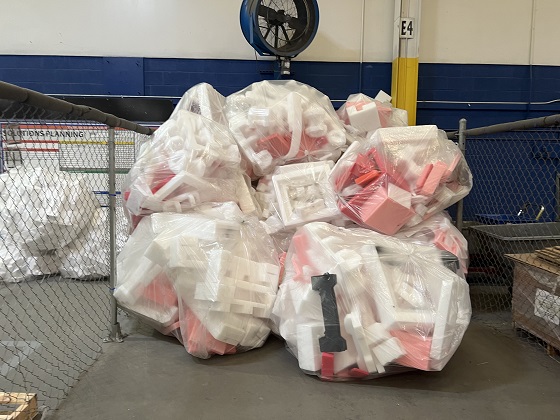
The main challenge with PE foam packaging is not always contamination. In many automotive sites, the material is clean and dry. The challenge is volume.
Loose PE foam fills cages, bags and bins quickly. It takes up floor space, requires frequent handling and can be expensive to transport because the vehicle is moving mostly air. If the foam is mixed with cardboard, wood, film or general waste, it becomes less attractive to recyclers and may lose value.
Common problems include:
overflowing packaging waste areas;
high collection frequency for low material weight;
poor separation between different packaging materials;
difficulty storing loose foam safely;
limited recycling options for uncompacted material;
lack of visible waste reduction data for internal sustainability reporting.
For large automotive sites, compacting package PE foam at source can solve these problems before the material leaves the factory.
GREENMAX solution for package PE foam recycling
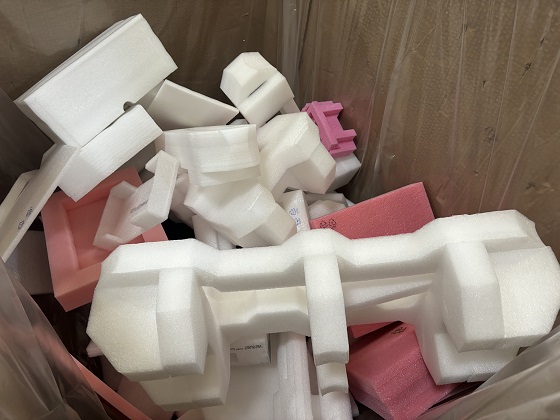
GREENMAX provides foam recycling machines designed to reduce the volume of lightweight foam waste. For package PE foam, the process usually starts with source separation. Clean and dry PE or EPE foam packaging is collected from production areas, unpacking stations or logistics zones, then fed into a suitable GREENMAX compacting or densifying machine.
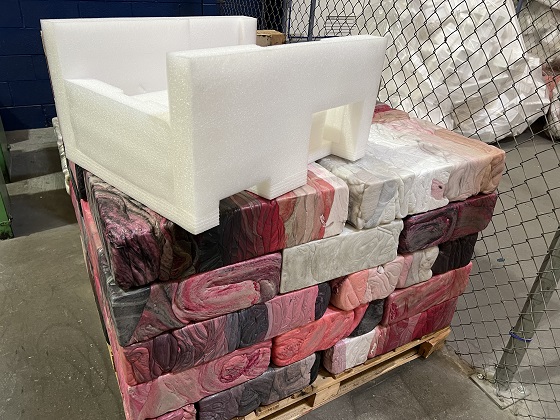
The machine transforms loose foam into dense blocks, logs or ingots. These compacted materials are easier to stack, store, load and transport. This makes recycling more practical and helps reduce the cost of moving bulky waste.
A GREENMAX package PE foam recycling solution can help UK automotive sites:
reduce waste storage space;
lower transport frequency;
improve material separation;
keep packaging foam out of general waste;
create a more organised recycling workflow;
prepare compacted PE foam for recycling or potential buy-back.
GREENMAX can also support a buy-back route for compacted foam where the material quality, volume and logistics conditions are suitable.
Recommended recycling workflow for UK automotive sites
1. Identify where PE foam packaging is generated
Start with inbound parts, assembly lines, unpacking areas, CKD/SKD operations, spare parts packaging and distribution centres. These are often the highest-volume points for PE foam waste.
2. Separate package PE foam from other materials
Keep PE foam away from cardboard, wood, film, straps, metal clips, food waste and general waste. Clean separation improves recyclability and supports more reliable waste reporting.
3. Compact the foam on site
Use a GREENMAX foam compactor or densifier to reduce the material volume. This step changes the economics of recycling because compacted foam is easier and more cost-effective to move.
4. Store compacted foam on pallets
Stacking compacted blocks or ingots on pallets helps automotive sites keep waste areas clean, safe and audit-ready.
5. Arrange recycling or buy-back
Once enough compacted material is collected, it can be sent to a recycling channel. GREENMAX can help assess whether a buy-back option is suitable for the site.
Which automotive businesses can benefit?
A package PE foam recycling system is suitable for many businesses in the automotive supply chain, including:
vehicle assembly plants;
Tier 1 and Tier 2 component suppliers;
battery component packaging areas;
parts distribution centres;
logistics providers;
trim, glass, lighting and electronics suppliers;
manufacturers receiving imported parts in protective foam packaging.
The more regular the foam waste stream, the more practical it becomes to install an on-site recycling machine.
Why choose GREENMAX?
GREENMAX helps businesses move from loose, bulky foam waste to a compacted recyclable material. The solution is not limited to equipment supply. It also includes advice on material separation, machine selection, storage method and downstream recycling possibilities.
For UK automotive manufacturers, this approach supports cleaner operations, better use of warehouse space and a more practical route for recycling package PE foam.
Conclusion
Package PE foam is essential for protecting automotive parts, but it can create a bulky and costly waste stream after use. As UK packaging waste rules and recycling expectations become more demanding, automotive manufacturers need practical on-site solutions.
A GREENMAX foam compactor or densifier can help UK sites reduce the volume of PE foam packaging, improve waste handling and prepare the material for recycling or potential buy-back. For OEMs and suppliers seeking a cleaner, more efficient packaging waste strategy, package PE foam recycling is a strong place to start.
FAQ about package PE foam recycling
Is package PE foam recyclable in the UK?
Yes. Clean and dry PE foam packaging can be recycled when it is separated from other materials and prepared properly. Compacting the foam makes recycling more practical by reducing its volume.
Does PE foam packaging relate to UK EPR or Plastic Packaging Tax?
It may. EPR applies to organisations that supply or import packaging, depending on their role and thresholds. Plastic Packaging Tax may apply to plastic packaging components with less than 30% recycled plastic. Businesses should check their own obligations.
Why is loose PE foam packaging expensive to manage?
Loose PE foam is lightweight but very bulky. It fills bins and cages quickly, which increases storage pressure and transport frequency. Compacting helps reduce these issues.
What types of automotive PE foam packaging can be compacted?
Sheets, pads, inserts, profiles, cushioning materials and clean EPE foam packaging can usually be compacted. Material should be kept clean, dry and separated from non-foam waste.
Does GREENMAX offer a buy-back service for compacted PE foam?
GREENMAX can help evaluate a buy-back or recycling route for compacted PE foam, depending on material quality, quantity, location and logistics conditions.