
 Select Languange
 English
 Spanish
 Polish
 Japanese
 Italy
Medical EPS Recycling in the UK: Choosing the Right Compactor
Hospitals, pharmaceutical laboratories and cold chain distribution centres receive a steady flow of packaging designed to protect sensitive products during transit. Diagnostic equipment may arrive in moulded EPS inserts, while some temperature-sensitive products are transported in insulated foam boxes alongside ice packs or phase-change materials.
Once unpacked, these materials can accumulate quickly in goods-in areas and warehouse storage spaces. Unlike cardboard, loose expanded polystyrene (EPS) cannot simply be folded away, making it difficult to manage where deliveries are frequent.
For healthcare facilities, research institutions and pharmaceutical distributors, the challenge is to establish a practical route for handling clean EPS packaging without allowing it to accumulate unnecessarily. Where collection arrangements and available storage space are no longer sufficient, on-site compaction may be worth considering.
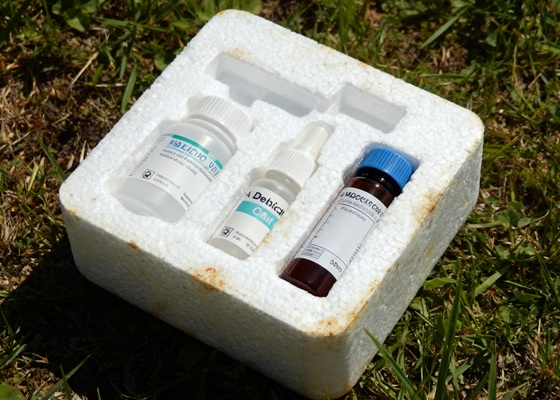
Managing EPS Packaging from Medical and Laboratory Deliveries
EPS packaging from healthcare and laboratory deliveries commonly includes equipment inserts, protective mouldings and insulated transport boxes. Before these materials enter a recycling stream, the packaging type and its condition need to be established.
Ice packs, phase-change materials, plastic films and other non-EPS components should be separated from the foam. Clean packaging can then be assessed against the requirements of the intended recycling provider. Boxes suitable for reuse may also be retained where an appropriate reuse arrangement exists.
Packaging that has been in contact with biological samples, pharmaceuticals or chemicals, or whose previous use is uncertain, requires assessment under the facility's waste management procedures. It should not automatically be treated as ordinary packaging waste.
Once the acceptable material stream has been established, the next consideration is how the packaging is collected. A university with multiple laboratories may benefit from centralised collection, whereas a pharmaceutical distribution centre receiving large quantities of EPS at one location may have a stronger case for on-site processing.
Why Consider On-Site EPS Compaction?
Loose EPS can occupy considerable storage space relative to its weight. Where collection takes place at fixed intervals, packaging may continue to accumulate between collections, placing additional pressure on storage areas and internal handling arrangements.
Compaction reduces the volume of suitable EPS by converting loose foam into denser blocks. This can make temporary storage and transport more manageable, although the financial case depends on the site's existing collection costs, equipment operating requirements and arrangements for moving the compacted material.
For healthcare organisations, waste management also sits within a wider sustainability context. In England, Simpler Recycling introduced phased workplace waste separation requirements from 31 March 2025. The rules do not mean that all EPS packaging can automatically enter a standard recycling collection; acceptance depends on the applicable arrangements and available recycling routes.
NHS England's net zero strategy sets targets of 2040 for emissions under its direct control and 2045 for its wider supply chain. These ambitions make resource use and waste management relevant considerations across healthcare operations, although installing a compactor alone does not demonstrate that material has been recycled or that emissions have been reduced.
A UK University Example
The University of Manchester's published EPS recycling information provides a local example of centralised foam collection and processing within a university setting.
For institutions with multiple buildings and laboratories, this approach illustrates how packaging from different collection points can be brought together for processing. Whether a facility also needs its own compactor depends on the quantity of EPS generated, internal transport arrangements and the recycling services already available.
Choosing an EPS Compactor for Medical Packaging
For facilities handling mainly EPS insulated boxes and moulded protective inserts, the GREENMAX APOLO Series Cold Compactor is an option to assess.
The APOLO series uses mechanical crushing and screw compression to process suitable EPS into dense blocks without heating and melting the foam as a whole. In medical and laboratory settings, the practical considerations are the dimensions of the packaging, the ease of feeding it into the machine and the quantity generated during normal operations.
Large insulated boxes may require checks on feed opening dimensions and loading methods. Protective inserts with complex shapes may also need testing to establish whether additional preparation is necessary. These details are more useful for equipment selection than simply identifying the waste as medical or laboratory packaging.
EPS Foam Compactor Video:
If a facility also generates significant quantities of EPE packaging foam, a separate assessment of thermal densification may be appropriate. The GREENMAX M-C200E can be considered for suitable EPE applications, subject to the material specifications and processing requirements.
Where several foam types are generated, their compatibility with the proposed equipment should be confirmed rather than assuming that one machine can process every material in the same way.
GREENMAX Pharmaceutical Transport Packaging Case: INSULPACK
A GREENMAX project involving INSULPACK in Israel provides a relevant example of equipment selection for pharmaceutical transport packaging.
The customer needed to process conventional EPS and graphite foam. The project used a GREENMAX A-C200 cold compactor configured with an enhanced crushing system for the materials involved, with the compacted material intended for subsequent recycling and reprocessing.
The case illustrates why material characteristics matter when selecting equipment for protective packaging. Even where materials serve similar purposes, their properties may affect the crushing configuration and processing requirements.
INSULPACK is an Israeli project, not a UK healthcare installation. It provides an example of GREENMAX equipment used in pharmaceutical transport packaging, but any proposed UK installation should be assessed against the materials and operating conditions at the intended site.
Planning for the Collection of Compacted EPS
Before purchasing equipment, facilities should establish whether a downstream recycling provider will accept the EPS packaging they generate and what conditions apply to material quality, contamination and delivery quantities.
Some providers may restrict certain foam types or require the removal of attached materials. Collection arrangements may also depend on the quantity of compacted material available for delivery.
Where blocks need to accumulate before collection, sufficient temporary storage and a practical route for moving the material to the collection point should be included in the site plan.
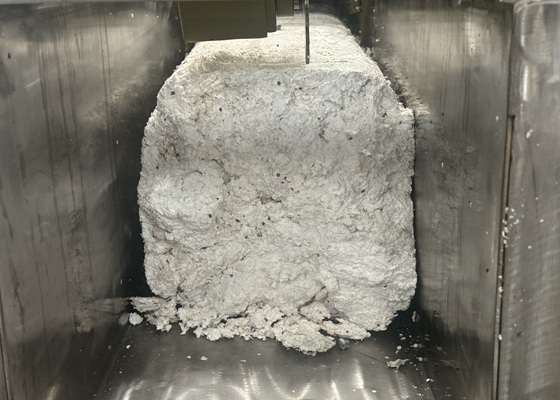
For healthcare and laboratory facilities, confirming the downstream route before installing equipment helps ensure that compaction fits into a workable waste management process.
Assess Your EPS Recycling Options with GREENMAX
If your UK healthcare facility, laboratory or pharmaceutical distribution centre regularly generates EPS packaging, GREENMAX can help assess suitable compaction options based on the material type, packaging dimensions and operating conditions.
For projects involving potential EPS block buyback through INTCO Recycling, acceptance criteria and transport arrangements must be confirmed separately according to material quality, delivery quantity and project location.