 Select Languange
 English
 Spanish
 Polish
 Japanese
 Italy
Italy
EPS Compactor vs EPS Hot Melter: Which Is Better for UK Businesses?
For UK businesses handling EPS packaging waste, the key question is often no longer whether EPS can be recycled, but how to reduce its volume efficiently before storage, collection and downstream recycling.
Two common options are an EPS compactor and an EPS hot melter. Both reduce the volume of bulky foam, but they use different processing methods and produce different forms of recycled material.
The right choice depends mainly on the condition and volume of the EPS, available space and downstream recycling requirements.
What Is the Difference Between an EPS Compactor and an EPS Hot Melter?
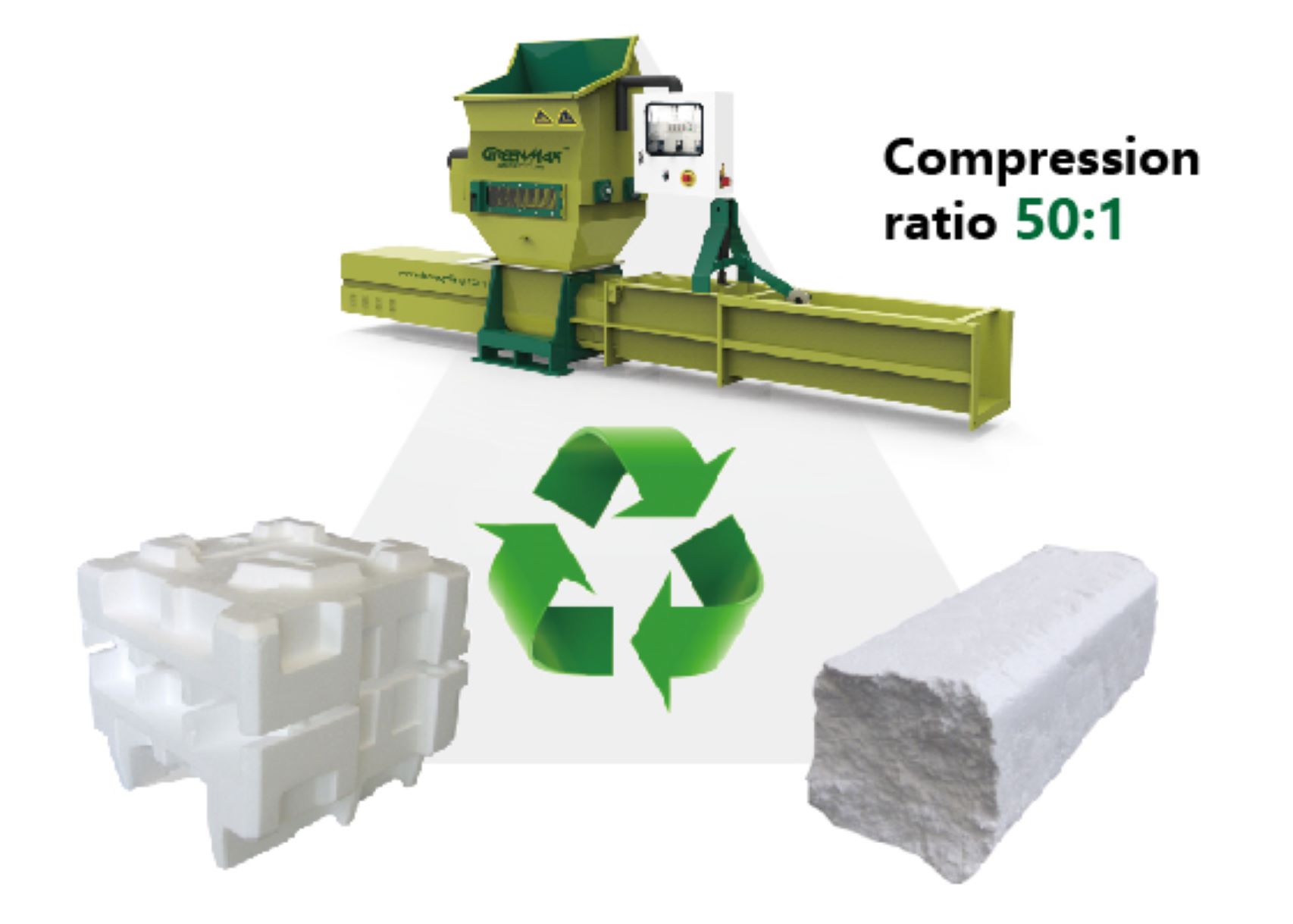
An EPS compactor reduces foam volume through mechanical compression. The EPS is usually crushed first and then compressed into dense blocks without melting the material.
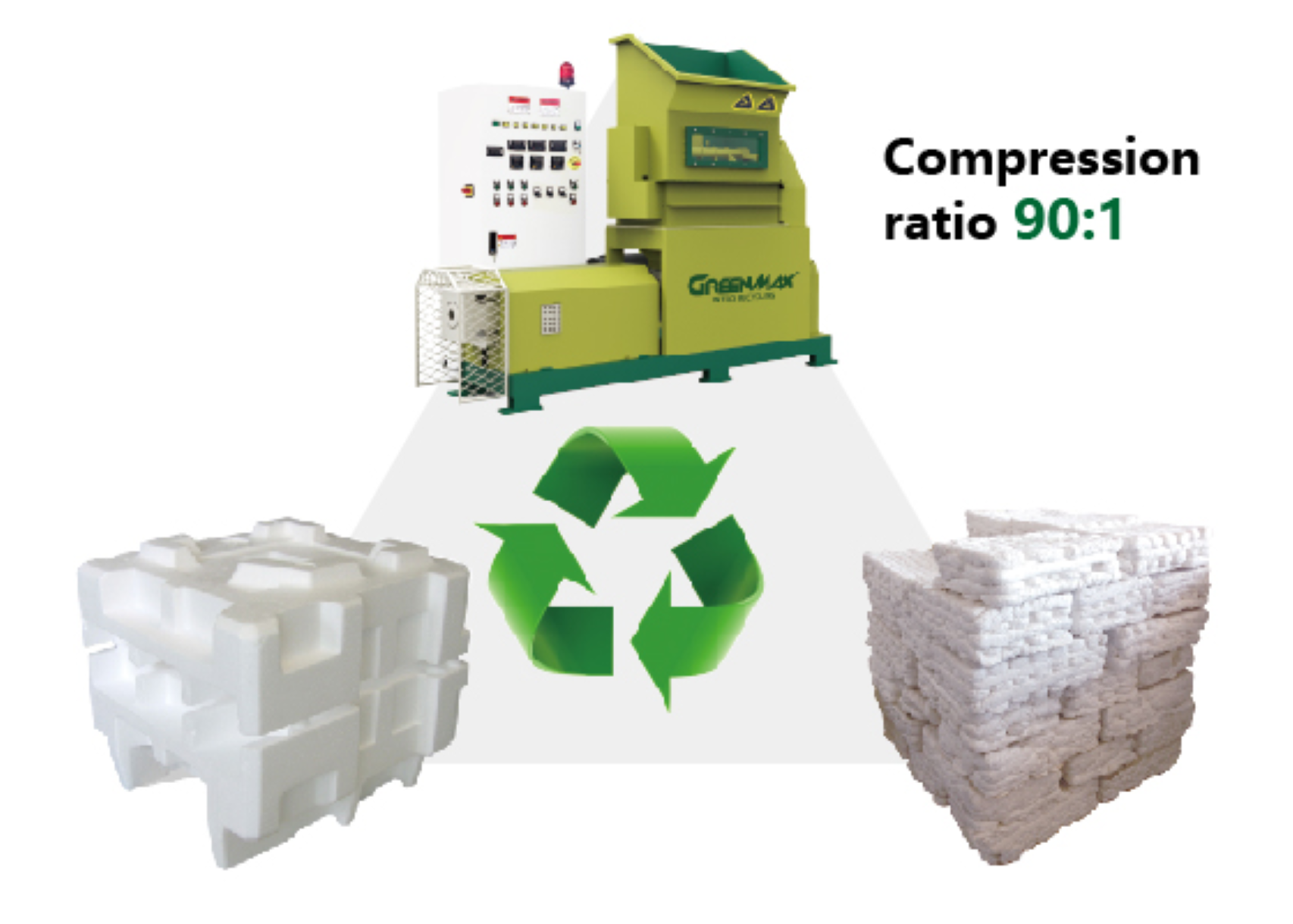
An EPS hot melter goes a step further. After crushing, the EPS is heated, melted and extruded into dense ingots, achieving a higher level of volume reduction.
In simple terms:
- EPS compactor: mechanical compression
- EPS hot melter: heating, melting and extrusion
Both methods make EPS easier to store and transport, but they differ in operating requirements and the form of the finished material.
When Is an EPS Compactor More Suitable?
Cold compaction is generally well suited to relatively clean and dry EPS packaging waste, including:
- Appliance and electronics packaging
- Furniture packaging
- EPS waste from distribution centres
- Protective packaging
- Clean EPS production offcuts
https://www.greenmaxmachine.co.uk/greenmax-apolo-series-cold-compactor.html
For businesses handling these materials, the main issue is usually volume rather than weight.
An EPS compactor turns loose foam into dense, stackable blocks, making storage and collection easier. If the compacted EPS already has a reliable recycling outlet, cold compaction may be enough to solve the main waste-handling problem on site.
When Is an EPS Hot Melter More Suitable?
An EPS hot melter is worth considering when greater volume reduction can deliver a practical benefit.
Once melted, EPS forms dense ingots that allow more material to be stored in a smaller space. This can be particularly useful where EPS volumes are high, storage space is limited or the material needs to be transported over longer distances.
Hot melting does, however, require heat, so its energy consumption is generally higher than that of cold compaction.
The real question is not simply which machine achieves the higher reduction ratio, but whether the higher material density can actually reduce storage, collection or transport costs.
https://www.greenmaxmachine.co.uk/greenmax-melter.html
The Condition of the EPS Also Matters
Not all EPS waste is clean white foam.
Waste foam may contain tape, labels, paper, dust, moisture or other contaminants. Clean production offcuts are generally easier to densify directly, while mixed or post-consumer EPS may require sorting or other pre-treatment first.
It is also important not to treat all foam materials as if they were EPS.
EPS, EPE, EPP and XPS have different structures and processing characteristics, so equipment selection should always begin with identifying the actual material being handled.
Check the Downstream Recycling Requirements Before Choosing
The form of the processed material can directly influence equipment selection.
Some recyclers accept compacted EPS blocks, while others may prefer high-density melted EPS ingots. Requirements may also vary in terms of contamination, moisture, colour and density.
Before purchasing equipment, it therefore makes sense to confirm what the downstream recycler is prepared to accept.
If compacted EPS blocks already have a stable recycling outlet, adding a hot-melting process purely to achieve a higher reduction ratio may offer little additional value.
EPS Compactor or EPS Hot Melter? A Practical Way to Decide
If a business handles clean, consistent EPS packaging waste, mainly wants to reduce storage space and collection frequency, and already has a reliable outlet for compacted blocks, an EPS compactor is usually the more straightforward choice.
If EPS volumes are higher, storage space is tight, transport distances are longer, or the downstream recycler prefers high-density melted EPS ingots, an EPS hot melter is likely to offer greater advantages.
If the waste contains significant moisture, oil or other contaminants, sorting, cleaning or other pre-treatment should be considered before deciding between cold compaction and hot melting.
In practical terms:
- Clean EPS where storage and collection are the main issues: consider an EPS compactor first.
- High EPS volumes, limited space or long transport distances: an EPS hot melter may be more suitable.
- A stable downstream outlet for compacted blocks: there may be little reason to switch to hot melting purely for a higher reduction ratio.
- A downstream recycler that prefers melted EPS ingots: an EPS hot melter is the stronger option.
- Heavily contaminated EPS: address pre-treatment before choosing the densification method.
The choice between cold compaction and hot melting ultimately comes down to two things: the main handling problem on site and where the material needs to go after densification.
If you are not sure whether an EPS compactor or EPS hot melter is the right fit for your waste stream, contact GREENMAX. We can help assess your material type, waste volume, site conditions and downstream recycling requirements, and recommend a more suitable solution.