 Select Languange
 English
 Spanish
 Polish
 Japanese
 Italy
Italy
EPS Collection Options for Businesses in England | GREENMAX
Under England's Simpler Recycling rules, expanded polystyrene (EPS) packaging is not included in the plastic waste types that businesses are required to collect for recycling. Warehouses, distribution centres and manufacturers that regularly generate EPS waste therefore need to check whether their existing waste collection service can accept it or arrange a separate recycling route.
EPS packaging is lightweight but takes up considerable space, making loose collection and transport relatively expensive. For businesses producing small amounts, a specialist collection service may be sufficient. Sites handling EPS every day, however, may need to look more closely at collection frequency, available storage space and whether on-site compaction would be worthwhile.
How Should Businesses Prepare EPS Waste for Collection?
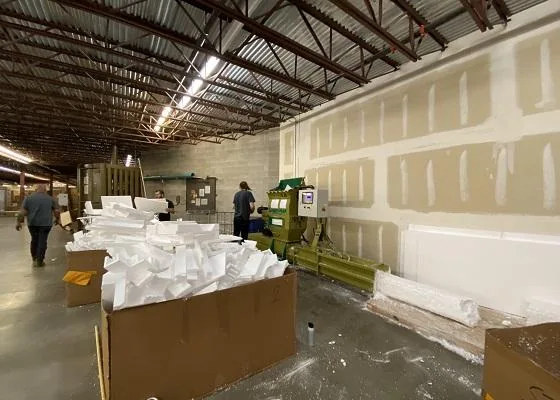
The first step is to keep EPS separate from other packaging waste where it is generated. At an appliance distribution centre, for example, a dedicated collection area near the unpacking stations can help staff separate EPS protective packaging from cardboard, plastic film and other cushioning materials. Manufacturers can take a similar approach by collecting EPS offcuts close to their cutting or packaging operations, reducing unnecessary movement around the site.
The condition of the material also affects whether a recycler will accept it. Some EPS packaging may contain labels, adhesive tape or other unwanted materials, which should be dealt with according to the receiving recycler's requirements. Businesses should also distinguish EPS from other foam materials, particularly EPE and EPP, rather than mixing them together.
Before contacting a collection provider, it is useful to establish roughly how much EPS is generated each week, where it is currently stored and how often it needs to be removed. Photographs of the actual waste can help the provider assess whether loose EPS is acceptable and whether any minimum collection quantities or material specifications apply.
What EPS Collection Options Are Available to Businesses in England?
Specialist EPS Waste Collection Services
For businesses that only occasionally generate EPS packaging, arranging collection through a specialist recycling company is often the most straightforward option. A small electrical retailer, for example, may be able to store clean EPS from unpacked appliances until there is enough material to arrange a collection, without investing in dedicated recycling equipment.
The main consideration is the cost of collecting relatively small quantities of bulky material. As loose EPS occupies a large amount of vehicle space, some collectors set minimum load requirements or charge according to distance and collection frequency. Where storage space allows, arranging less frequent collections may help reduce the cost per collection.
Regular Collections Through a Local EPS Recycler
Businesses generating EPS waste consistently each week may benefit from establishing a regular arrangement with a specialist recycler rather than booking individual collections.
An EPS packaging manufacturer, for instance, may produce offcuts throughout the working week. Setting aside a designated storage area and agreeing a collection schedule with a recycling company can make waste handling more predictable and reduce the need for last-minute collection arrangements.
However, acceptance requirements vary between recyclers. Some can handle loose EPS, while others prefer material that has already been compacted. It is therefore important to agree on the required material condition, form and minimum quantities before establishing a collection routine.
Centralised EPS Collection Using Existing Logistics Routes
Businesses operating several retail outlets or delivery vehicles may be able to use their existing logistics network to bring EPS packaging back to a central warehouse.
Furniture delivery is one example. Where collection arrangements are in place, packaging removed during deliveries can be taken back to the distribution centre on returning vehicles, allowing the business to manage EPS from several locations rather than arranging separate collections at each outlet.
This approach depends on the space available in returning vehicles and the capacity of the central site to handle the incoming material. If several branches regularly send loose EPS back to the same warehouse, the business may need to review how the packaging is stored and processed to prevent it from interfering with normal goods handling.
On-Site EPS Compaction Before Collection
For warehouses, distribution centres and manufacturers generating substantial quantities of EPS every day, on-site compaction can make storage and onward transport easier to manage.
Large appliance distribution centres, for example, may regularly unpack refrigerators, washing machines and other bulky products. The resulting EPS packaging includes protective bases, corner pieces and moulded supports in various shapes and sizes. When stored loose, these materials can quickly fill a waste holding area, requiring staff to move and reorganise the packaging to keep the workspace clear.
An EPS compactor allows businesses to process loose foam into dense blocks that can be stored together before collection. This can be particularly useful where EPS volumes are consistent, storage space is limited or frequent collections of loose material have become costly.
On-site compaction is not necessarily the right choice for every business. If a company produces relatively little EPS and already has an affordable, reliable collection arrangement, there may be no need for additional equipment. However, where bulky packaging regularly occupies valuable warehouse space or requires frequent collections, comparing the costs of compaction with the existing waste service may be worthwhile.
Before investing in equipment, businesses should also confirm that their downstream recycler accepts cold-compacted EPS blocks and check any requirements relating to block dimensions, cleanliness and delivery quantities. This helps ensure that on-site processing fits into an established recycling route.
How Can the GREENMAX APOLO A Support EPS Waste Collection?
For businesses considering on-site volume reduction, the GREENMAX APOLO A Series cold compactor processes loose EPS packaging into dense blocks, helping reduce the space required for waste storage.
The machine combines shredding and mechanical screw compaction without melting the material. Depending on the EPS characteristics and equipment configuration, the APOLO A Series can achieve volume reduction ratios of up to 50:1. The resulting blocks can be stored together and collected according to the receiving recycler's requirements.
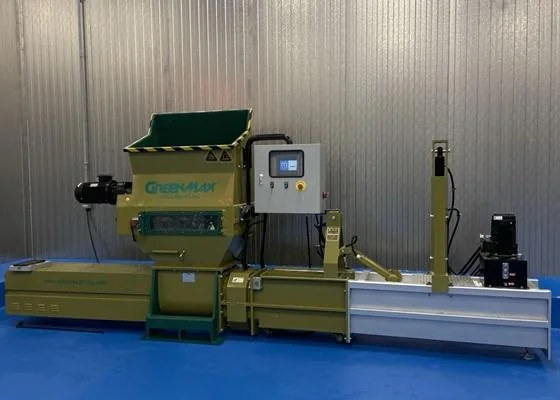
In practice, choosing a suitable machine involves more than matching its hourly processing capacity to the amount of waste generated. The size and shape of the EPS packaging also need to be considered. Appliance distribution centres often handle large moulded protective pieces, so the feed opening and shredding arrangement must suit the material. Manufacturers producing EPS cutting offcuts, meanwhile, may need a machine that can keep pace with their normal production schedule.
The position of the equipment within the building is another important consideration. In warehouses with limited floor space, the collection area, machine feeding position and compacted block storage should be planned around existing goods movements, loading activities and access routes.
The GREENMAX APOLO A Series cold compactor is available in different capacities and configurations. Businesses can assess a suitable model based on their EPS waste volumes, available space and the requirements of their recycling partner.
Choosing an EPS Collection Arrangement That Works for Your Business
The most suitable EPS collection method depends on how much packaging waste a business generates, the space available for storage and the arrangements offered by local recycling companies.
Specialist collection services may be sufficient for smaller or occasional waste streams. Businesses dealing with larger, consistent quantities of EPS should also consider whether their current collection arrangements are creating unnecessary storage and transport costs.
For companies exploring on-site compaction, information such as weekly EPS volumes, existing collection frequency, available floor space and the receiving recycler's requirements can help determine whether a GREENMAX APOLO A cold compactor would be a practical addition to their waste management process.
FAQ: EPS Waste Collection in England
Can businesses in England put EPS packaging in their general recycling bins?
Not as part of the standard Simpler Recycling requirements. Expanded polystyrene packaging is excluded from the plastic materials that workplaces are required to collect for recycling. Businesses should check with their waste contractor before placing EPS in a mixed dry recycling bin and arrange a separate collection where necessary.
Does EPS need to be compacted before a recycler will collect it?
Not always. Some specialist recycling companies accept loose EPS, although minimum collection quantities, material cleanliness and transport distance may affect the service available. For businesses producing larger volumes, on-site compaction can reduce storage requirements and make transport more efficient, provided the receiving recycler accepts the compacted material.