
 Select Languange
 English
 Spanish
 Polish
 Japanese
 Italy
Italy
Package PE Foam Recycling for UK Automotive OEMs | GREENMAX Foam Densification Solution
The UK automotive industry is moving through a major transition. Vehicle manufacturers are investing in electric vehicles, battery systems, lightweight components, advanced electronics and more resilient supply chains. At the same time, automotive OEMs are under pressure to reduce waste, improve resource efficiency and demonstrate stronger environmental performance across production and logistics.
One often-overlooked waste stream in automotive manufacturing is package PE foam. Polyethylene foam is widely used to protect vehicle parts, battery components, electronic modules, interior trim, glass, lighting systems, painted parts and precision assemblies during transport and internal handling. It performs well because it is flexible, shock-absorbing, moisture-resistant and suitable for repeatable industrial packaging designs.
However, once parts are delivered to the assembly plant or component preparation area, package PE foam can quickly become a bulky waste problem. It takes up space, fills stillages and bins, increases handling work and can become expensive to transport if it is collected loose. For UK automotive OEMs, managing package PE foam more efficiently is now part of a wider strategy for cleaner production, lower logistics costs and better packaging sustainability.
GREENMAX provides foam densification and compaction solutions that help automotive manufacturers reduce the volume of package PE foam waste, keep packaging areas cleaner and prepare foam for recycling.
UK Automotive Industry Trends
1. Automotive manufacturing is becoming more electrified
The UK automotive sector is shifting towards zero-emission vehicle manufacturing. Electric vehicles, battery packs, power electronics and high-value control systems require careful logistics protection. These components are often sensitive to impact, vibration, moisture and surface damage. As a result, protective packaging remains essential throughout the supply chain.
For OEMs, the challenge is not simply to reduce packaging, but to manage protective materials responsibly after use. Package PE foam is part of this challenge because it is common in inbound parts packaging, internal logistics and supplier deliveries.
2. Sustainability is now a manufacturing requirement
UK automotive OEMs are expected to reduce carbon impact, energy use, material waste and landfill dependency. Sustainability is no longer limited to vehicle tailpipe emissions. It extends to the factory, the supply chain, packaging, waste management and reporting.
As automotive customers, regulators and investors focus more on ESG performance, packaging waste reduction becomes a visible operational improvement. A plant that can sort, densify and recycle package PE foam has a stronger story than a plant that sends mixed foam packaging to general waste.
3. Packaging compliance is becoming more cost-sensitive
The UK’s Extended Producer Responsibility for packaging and Plastic Packaging Tax both increase the importance of packaging design, recyclability and recycled content. Automotive OEMs and their suppliers need to understand how packaging choices affect compliance exposure, data reporting and cost.
Even when package PE foam waste is generated from inbound supplier packaging, OEMs still have a strong operational reason to improve sorting and recovery. Better foam waste management can reduce skip usage, support supplier discussions and help the business prepare for changing packaging expectations.
4. Supply chains need both protection and circularity
Automotive parts cannot be moved without protection. Painted panels, dashboards, screens, lamps, sensors, battery modules and precision-machined parts can be damaged easily. Package PE foam helps prevent costly defects and line disruption. The future trend is not to remove all foam immediately, but to make packaging systems cleaner, more reusable where possible and more recyclable at end of life.
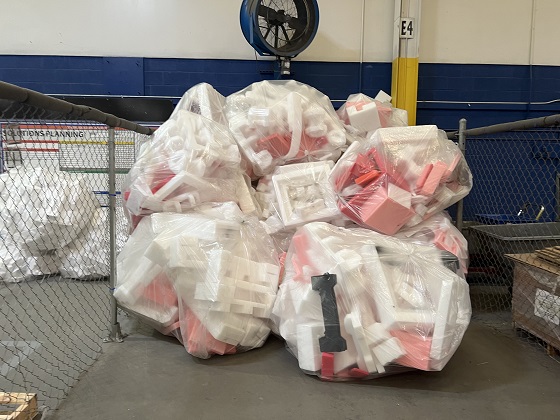
Why Package PE Foam Is Generated in Automotive OEM Plants
Package PE foam is generated because automotive components often require reliable protection during transport, storage and assembly. The main sources include:
Inbound packaging from Tier 1 and Tier 2 suppliers.
Foam inserts for electronic modules, sensors and control units.
PE foam sheets used between painted or finished surfaces.
Protective foam pads for glass, lighting and interior parts.
Custom dunnage for EV battery-related components.
Foam wrapping for fragile or high-value assemblies.
Offcuts or damaged foam from repacking and internal logistics.
One-way packaging used for imported components.
Although some automotive packaging is returnable, many plants still receive single-use or limited-use foam packaging. When daily production volumes are high, package PE foam waste can build up quickly.
Pain Points for UK Automotive OEMs
1. Loose PE foam takes up too much space
PE foam is lightweight but bulky. In a busy automotive plant, loose foam can fill cages, bins and waste areas faster than expected. This creates pressure on production space, logistics lanes and waste storage zones.
2. Waste collections become inefficient
When PE foam is collected loose, vehicles transport a large volume of air. This can increase collection frequency and disposal cost. For OEM sites that already manage multiple waste streams, loose foam adds unnecessary complexity.
3. Mixed waste reduces recycling potential
Package PE foam is easier to recycle when it is clean and separated. If it is mixed with cardboard, labels, wood, strapping, oil, general waste or other plastics, it may be rejected by recyclers or sent to lower-value disposal routes.
4. Factory housekeeping becomes harder
Automotive production depends on clean, organised and safe working areas. Loose packaging foam can block walkways, create visual clutter and increase manual handling work. Reducing foam volume supports better housekeeping and lean manufacturing.
5. OEMs need measurable sustainability improvements
Automotive OEMs often track waste reduction, landfill diversion and recycling performance. A foam densification system can provide a clear before-and-after improvement: fewer bulky skips, cleaner material streams and more compact recyclable output.
6. Packaging sustainability affects supplier relationships
OEMs increasingly ask suppliers to improve packaging design, reduce single-use materials and support circularity. By managing package PE foam effectively on site, OEMs gain better data and stronger leverage for supplier packaging improvement programmes.
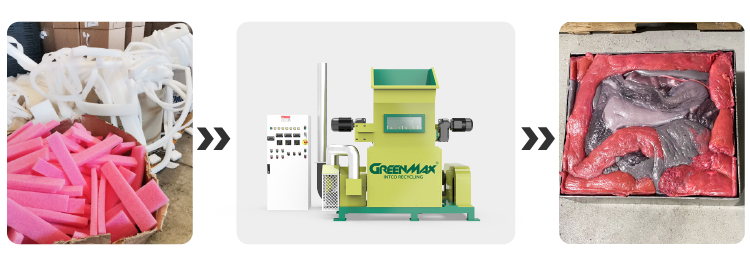
GREENMAX Solution for Package PE Foam Recycling
GREENMAX helps automotive OEMs reduce the volume of package PE foam through foam densification and compaction technology. The solution is designed for companies that generate regular volumes of clean PE foam packaging waste and need a practical way to reduce disposal pressure.
How the process works
1. Collect clean PE foam separately
Operators separate package PE foam from cardboard, wood, metal, labels, films and general waste.
2. Feed the foam into the GREENMAX machine
Loose PE foam is loaded into the equipment. The machine compresses or densifies the material by reducing its internal air volume.
3. Create dense foam output
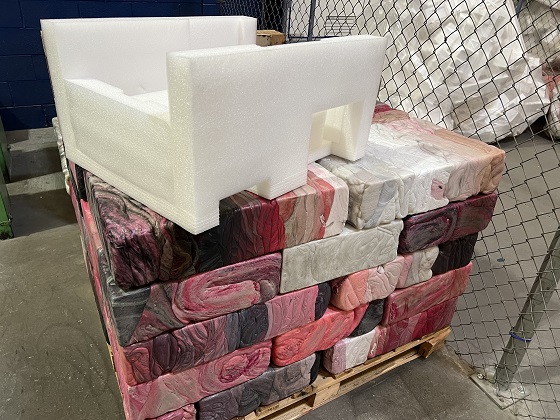
The processed foam becomes much more compact. It can be stored, palletised and handled more easily than loose foam.
4. Reduce storage and transport pressure
Densified PE foam requires less space and can reduce the number of waste collections.
5. Prepare material for recycling partners
Clean, densified PE foam is easier to transport to suitable recycling channels, depending on local availability and material quality.
Benefits for UK Automotive OEMs
Reduce the volume of package PE foam waste at source.
Lower skip bin pressure and waste collection frequency.
Improve factory housekeeping and logistics area organisation.
Separate PE foam from other packaging materials more effectively.
Support landfill diversion and packaging recycling targets.
Create measurable data for ESG and sustainability reporting.
Improve supplier packaging discussions with clearer waste-stream information.
Align protective packaging management with the wider shift to low-carbon vehicle manufacturing.
Recommended Waste Management Plan for Automotive Plants
A practical package PE foam recycling plan should be easy for production and logistics teams to follow. GREENMAX recommends the following approach:
1. Map where package PE foam is generated in the plant.
2. Identify whether the foam is clean PE foam or mixed with other materials.
3. Set up separate collection points near unpacking and line-side preparation areas.
4. Train operators to keep PE foam separate from cardboard, wood, metal and general waste.
5. Install a GREENMAX foam densification solution close to the main generation point.
6. Store densified material in a dedicated area.
7. Track foam volume reduction, skip collections and recycling output.
8. Use the data to support internal sustainability reporting and supplier packaging reviews.
Conclusion
Package PE foam plays an important role in the UK automotive supply chain. It protects valuable components, reduces transport damage and supports efficient production. But when the foam reaches the OEM plant, it can become a bulky and costly waste stream if it is not managed properly.
For UK automotive OEMs, package PE foam recycling is an opportunity to improve waste efficiency, reduce transport pressure and strengthen sustainability performance. GREENMAX foam densification solutions help turn loose PE foam packaging into compact, manageable material that is easier to store, transport and recycle.
As the UK automotive sector continues its transition towards electric vehicles, advanced manufacturing and cleaner production, packaging waste management should move in the same direction. GREENMAX can help automotive plants make package PE foam recycling a practical part of daily operations.
FAQ
What is package PE foam?
Package PE foam is polyethylene foam used as protective packaging. It cushions automotive parts, prevents scratches and absorbs impact during transport and handling.
Why do UK automotive OEMs use PE foam packaging?
Automotive OEMs use PE foam because many components are fragile, expensive or surface-sensitive. PE foam helps protect parts such as electronics, trims, lamps, glass, painted surfaces and EV components.
Can package PE foam be recycled?
Yes. Clean and separated PE foam can be densified or compacted to make recycling more practical. It should not be mixed with general waste, cardboard, wood, metal or contaminated materials.
Why is loose PE foam expensive to dispose of?
Loose PE foam is mostly air. It fills bins and skips quickly, so companies may pay for frequent collections while transporting low-density material. Densification reduces the volume and improves logistics efficiency.
How does GREENMAX help automotive OEMs?
GREENMAX provides foam densification and compaction equipment that reduces the volume of package PE foam. This helps OEMs save space, lower collection frequency, improve factory housekeeping and prepare foam for recycling.
Where should an automotive plant place a foam densifier?
The machine should be placed near the main foam generation point, such as inbound packaging areas, line-side unpacking zones or component preparation areas. This reduces internal handling and encourages correct sorting.
Does package PE foam recycling support ESG reporting?
Yes. Foam volume reduction, landfill diversion and improved material separation can support ESG reporting and demonstrate practical packaging waste reduction in automotive manufacturing.