 Select Languange
 English
 Spanish
 Polish
 Japanese
 Italy
Italy
Fully Automatic Balers in the UK: Cut Recycling Costs and Labour in High-Volume Waste Operations
For UK businesses that handle large volumes of cardboard, paper packaging, plastic film, PET bottles or mixed recyclable waste, recycling is no longer just a housekeeping task. It has become a cost, compliance and productivity issue. Loose recyclable materials fill cages and skips quickly, block loading bays, require frequent collections and often need repeated manual handling before they can leave site.
This is why more warehouses, distribution centres, retailers, manufacturers and recycling plants are reviewing their baling process. A fully automatic baler can compress loose recyclables into dense, uniform bales while reducing manual wire tying, improving storage efficiency and helping businesses prepare for stricter recycling expectations. For high-volume operations, the right baler is not simply a waste machine; it is a long-term cost-control tool.
UK industry trends: recycling is becoming more compliance-driven and data-driven
The UK recycling market is moving towards cleaner material streams, better separation and stronger evidence of where packaging waste goes. Under England's Simpler Recycling rules, workplaces must separate dry recyclable materials such as plastic, metal, glass, paper and card, along with food waste and residual waste. These requirements came into force on 31 March 2025 for most workplaces, while micro-firms with fewer than 10 full-time equivalent employees have until 31 March 2027.
At the same time, Extended Producer Responsibility for packaging is changing how packaging costs are allocated. The 2025 to 2026 base fees published by PackUK include material-specific charges such as GBP 196 per tonne for paper and card and GBP 423 per tonne for plastic. Even where a business is not directly liable as a producer, the direction is clear: packaging waste is becoming more visible in supply chains, and cleaner, better-managed recyclable material is more valuable.
Plastic packaging is also under pressure. The UK Plastic Packaging Tax applies to plastic packaging components containing less than 30% recycled plastic, with the rate increased to GBP 228.82 per tonne from 1 April 2026. For drinks supply chains, the Deposit Return Scheme will add responsibilities for in-scope single-use PET, aluminium and steel drink containers from 1 October 2027. These policies all point in the same direction: UK businesses need better on-site systems for segregating, compacting and documenting recyclable materials.
Why does commercial packaging waste keep being generated?
Packaging waste is created because modern business operations rely on protection, movement and traceability. In logistics and fulfilment, goods arrive in corrugated boxes, pallet wrap, protective film and transit packaging. In retail, back-of-house teams handle outer cartons, shelf-ready packaging, plastic wrap and seasonal promotional packaging. In manufacturing, incoming raw materials and outbound finished goods both generate packaging offcuts, trim waste and rejects.
Much of this waste is unavoidable at the point of use. Cardboard protects products in transit. Plastic film stabilises pallets and keeps goods clean. PET and HDPE containers are used because they are lightweight and efficient. The real issue is not that packaging exists, but that loose packaging waste is bulky, costly to move and easy to contaminate when it is not managed at source.
The main pain points for UK businesses handling loose recyclables
The first problem is space. Loose cardboard and plastic film have low density, so they occupy valuable warehouse, stockroom and yard space. This can affect goods-in areas, dispatch lanes and fire-safe storage practices.
The second problem is labour. Teams may spend time flattening boxes, moving loose material, loading cages, waiting for collections or tying bales manually. Where waste volumes are high, this can become a daily productivity drain.
The third problem is transport cost. Loose waste fills containers quickly, which can increase collection frequency. More collections mean more vehicle movements and more exposure to haulage costs.
The fourth problem is material value. Recyclers generally prefer clean, compact and consistent bales. Poorly stored loose recyclables can become wet, mixed or contaminated, lowering the value of the material and increasing rejection risk.
The fifth problem is compliance confidence. With recycling rules becoming stricter, businesses need processes that make it easier to keep paper and card, plastic film, bottles and other recyclable materials separated before collection.

How a fully automatic baler reduces recycling costs and labour
A fully automatic horizontal baler is designed for continuous, high-volume waste handling. Instead of relying on repeated manual loading and manual tying, material can be fed into the machine and compressed into dense bales with a more consistent output. In an automatic baler with auto tying, the wire tying process is completed by the system when the bale reaches the preset size.
This can reduce recycling costs in several practical ways. Dense bales use less storage space, allowing businesses to hold more material before collection. Collection frequency can often be reduced because the same waste stream takes up far less volume once baled. Labour demand is also lowered because operators no longer need to spend the same amount of time manually tying, handling and organising loose waste.
For larger sites, automation also improves consistency. A uniform bale is easier to stack, easier to load and easier for recyclers to handle. This is especially important for cardboard, OCC, paper packaging, plastic film, PET bottles and other materials that are generated every day in high volumes.
GREENMAX recycling solution: fully automatic horizontal baler with auto tying
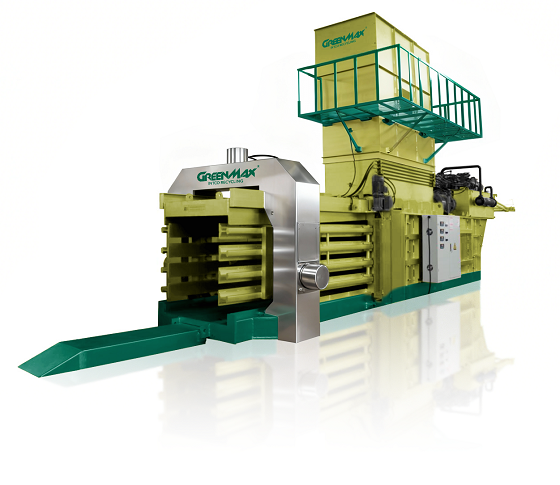
GREENMAX provides a fully automatic horizontal baler designed for demanding recycling and industrial waste applications. The machine uses PLC control for automatic operation and process monitoring, and its integrated automatic wire tying system reduces manual wire feeding and operator involvement. This makes it especially suitable for UK operations facing rising labour pressure, limited warehouse space and daily recyclable waste streams.
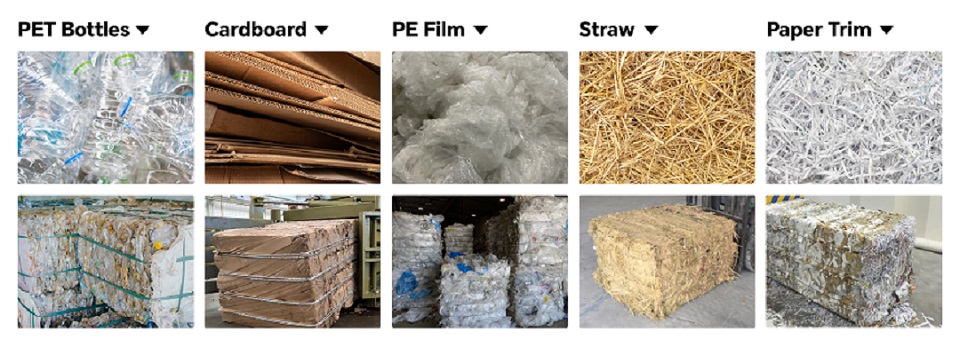
The GREENMAX automatic horizontal baler is suitable for cardboard and OCC, paper and packaging waste, plastic films and soft plastics, PET bottles and general industrial waste. It is designed for recycling centres, waste transfer stations, warehouses, distribution centres, manufacturing plants, logistics and fulfilment centres, and retail back-of-house areas.
For sites that need different capacities, GREENMAX offers models from GMHB-A40 to GMHB-A200, with published throughput ranges from 1-3 tonnes per hour up to 14-20 tonnes per hour depending on model and material conditions. This allows businesses to match the baler to actual waste volume, bale size requirements, available floor space and collection arrangements.
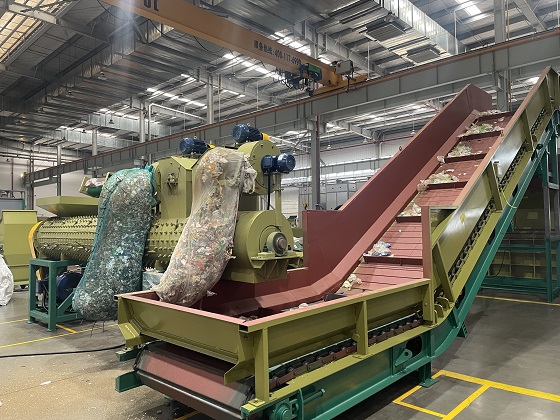
The value of GREENMAX is not only the machine itself. A practical solution should start with a material assessment: what waste is produced, how clean it is, how often it is generated, how it is currently collected and what bale specification the downstream recycler requires. From there, GREENMAX can recommend a suitable automatic baler configuration and, where needed, combine baling with upstream conveyors, shredding, dewatering or other recycling equipment.
Which UK businesses benefit most from an automatic baler?
A fully automatic baler is usually most suitable where recyclable waste is produced continuously or in large daily volumes. Typical UK applications include distribution centres handling large quantities of corrugated packaging, retail chains with centralised back-of-house waste streams, e-commerce fulfilment sites, manufacturing plants producing regular packaging or production scrap, recycling plants that need stable bale output, and waste transfer stations consolidating material for resale.
Smaller sites may still benefit from a vertical or semi-automatic baler. However, once manual tying, frequent collections and labour hours become a bottleneck, a fully automatic horizontal baler can offer a more scalable route.
How to choose the right baler for recycling cost reduction
Before investing, UK businesses should review four factors. First, calculate the real volume of cardboard, film, bottles or mixed recyclables generated per day or per week. Second, check how much labour is currently spent moving, flattening, tying or loading waste. Third, review collection invoices and whether loose material is increasing transport frequency. Fourth, confirm the bale size, density and material quality preferred by the recycler or waste contractor.
A baler should fit the whole waste process, not just the footprint of the machine. Feed method, operator access, safety controls, storage area, bale handling and downstream sale or collection should all be considered. When the baler is properly matched to the site, it can help reduce avoidable waste handling costs while supporting cleaner recycling and stronger sustainability reporting.
Conclusion: turn packaging waste into a more controlled resource stream
UK businesses are under pressure to reduce waste costs, improve recycling quality and adapt to changing policy. Loose cardboard, plastic film and packaging waste create unnecessary labour, storage and collection problems. A fully automatic baler helps solve these issues by turning bulky recyclable waste into dense, consistent bales that are easier to store, transport and sell.
For high-volume operations, the GREENMAX fully automatic horizontal baler offers a practical route to reduce manual handling, improve workplace efficiency and build a more reliable recycling process. If your site is generating regular cardboard, plastic film, PET bottle or industrial packaging waste, now is the right time to review whether automatic baling can lower your long-term recycling costs.
FAQ
What is a fully automatic baler?
A fully automatic baler is a recycling machine that compresses loose waste into dense bales and automates key steps such as compression and wire tying. It is usually used by high-volume sites that generate cardboard, paper, plastic film, PET bottles or other recyclable materials every day.
How does a fully automatic baler reduce recycling costs?
It reduces the volume of loose waste, which can lower collection frequency, save storage space and make recyclable material easier to transport. By automating the tying process, it can also reduce labour time compared with manual or semi-automatic baling.
Is an automatic horizontal baler suitable for cardboard recycling in the UK?
Yes. Cardboard and OCC are common materials for automatic horizontal balers, especially in warehouses, distribution centres, retail back-of-house areas and manufacturing sites that generate large volumes of corrugated packaging.
Can a GREENMAX automatic baler handle plastic waste?
Yes. The GREENMAX automatic horizontal baler is suitable for several recyclable materials, including cardboard, paper packaging, plastic films, soft plastics, PET bottles and general industrial waste, depending on material condition and the selected model.
When should a business choose a fully automatic baler instead of a vertical baler?
A fully automatic baler is usually the better choice when waste volume is high, material is generated continuously, labour availability is limited or manual tying has become inefficient. Smaller sites with lower volumes may still be better suited to a vertical or semi-automatic baler.
Does a baler help with UK recycling compliance?
A baler does not replace legal compliance, but it can support a better waste process by helping businesses keep recyclable materials compact, clean and separated before collection. This is useful as UK recycling rules increasingly focus on separation, material quality and traceability.