 Select Languange
 English
 Spanish
 Polish
 Japanese
 Italy
Italy
EPP Foam Recycling for UK Automotive Tier 1 Suppliers: Cut Volume, Haulage Cost, and Improve Traceability
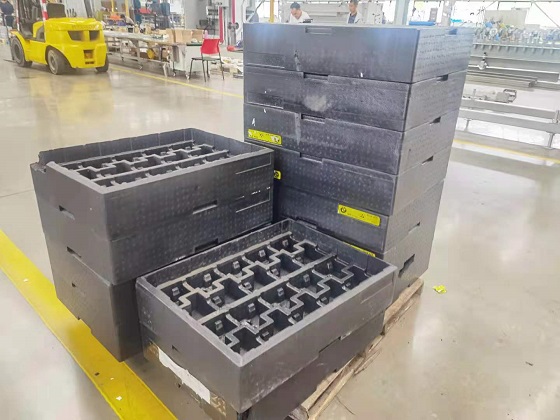
EPP foam (expanded polypropylene) is used across automotive interiors and protective packaging because it’s lightweight, resilient, and shock-absorbing. For UK Automotive Tier 1 suppliers—companies that supply components directly to vehicle manufacturers (OEMs)—that lightweight advantage becomes a challenge after production: EPP waste is bulky, fills storage quickly, and is expensive to move when it stays loose.
This article lays out a practical approach designed for UK Automotive Tier 1 operations: separate the stream → reduce volume onsite → standardise output → lower collections and improve recycler terms, while also supporting the documentation and traceability customers increasingly expect.
Why EPP foam waste is costly for UK Automotive Tier 1 sites
1) Loose EPP is “mostly air”—transport cost becomes the real issue
Even when EPP is recyclable, loose foam loads poorly. Collections are often priced by trip, container volume, or handling time, so costs climb fast if you’re shipping low-density material.
2) Automotive Tier 1 waste streams are rarely uniform
Common EPP sources in UK Automotive Tier 1 facilities include:
Clean production offcuts (trim waste, die-cut edges)
Packaging inserts and dunnage (protective blocks, returnable packaging)
Scrap or rejected EPP parts (irregular shapes, varying thickness)
If these are mixed with film, labels, tape, or other plastics, recyclers may classify the stream as mixed/contaminated—often reducing acceptance and lowering pricing.
3) Customers want measurable diversion and auditable downstream handling
Automotive programmes increasingly require suppliers to demonstrate:
diversion quantities (monthly/quarterly)
consistent internal handling procedures (5S)
traceable downstream recycling routes
A better EPP workflow is not only a cost improvement—it also supports compliance and reporting.
The practical solution: reduce EPP volume onsite, then ship stable output
The fastest improvement for UK Automotive Tier 1 suppliers is simple:
Stop transporting air. Convert loose foam into a dense, consistent form that ships efficiently.
Step 1: Separate “clean EPP” from “mixed EPP”
Start with two grades:
Grade A: Clean EPP (production offcuts, clean inserts, minimal contamination)
Grade B: Mixed EPP (film/tape/labels, mixed plastics, uncertain composition)
This separation is often the quickest way to improve recycler acceptance and unlock better long-term terms for clean EPP.
Step 2: Choose the right volume-reduction method
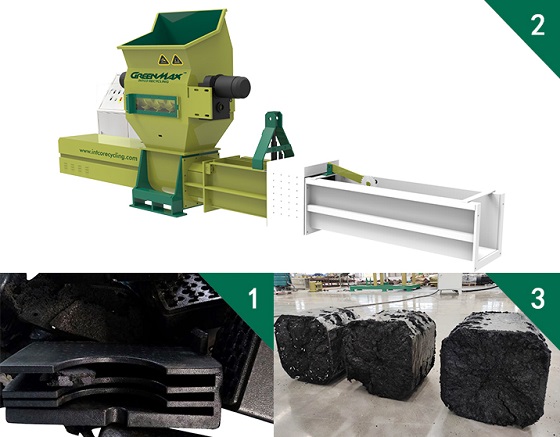
EPP Melter (ideal for consistent EPP streams)
Melting EPP into compact, dense blocks.
Best for: clean offcuts and clean packaging EPP with stable daily volume.
Benefits:
major reduction in storage footprint
fewer collections and better payload utilisation
stable output format that recyclers prefer
GREENMAX supports EPS/EPE/EPP recycling equipment for export markets, including Europe and North America. For UK Automotive Tier 1 sites, the priorities are practical: volume reduction performance, stable output, and measurable reporting.
FAQs (UK Automotive Tier 1)
Can EPP foam be recycled in the UK?
Yes. EPP is recyclable, but the economics depend heavily on onsite handling. Separating clean material and reducing volume before transport typically improves feasibility.
Why not send loose EPP directly to a recycler?
Because loose EPP loads poorly and increases transport cost per tonne. Volume reduction is often the difference between a cost-only stream and a manageable recycling stream.
What should an Automotive Tier 1 supplier do first?
Start by separating clean vs mixed EPP, then implement densifying or baling based on waste profile and daily volume.
Get a tailored EPP recycling setup and cost-down estimate for your site
If you’re a UK Automotive Tier 1 supplier dealing with bulky EPP foam offcuts, packaging inserts, or scrap parts, we can propose a site-ready solution focused on reducing storage volume, cutting collections, and improving traceability.
Request a quick assessment from GREENMAX and we’ll provide:
A recommended workflow (densifying vs baling vs hybrid)
Suggested equipment configuration based on your footprint and throughput
An estimated logistics reduction approach (collections, storage, handling)
To get started, send these 6 details (takes 2 minutes)
1. Your EPP sources: offcuts / packaging / rejected parts (approx. %)
2. Daily volume: average + peak (bags, bins, or kg)
3. Contamination: film/tape/labels present? (yes/no)
4. Current storage situation: how much floor space is taken by loose EPP?
5. Any customer requirements for reporting/traceability (if applicable)
Contact GREENMAX to schedule a short call or share your details for a proposal.