 Select Languange
 English
 Spanish
 Polish
 Japanese
 Italy
Italy
Styrofoam Recycling in the UK: make EPS waste worth collecting
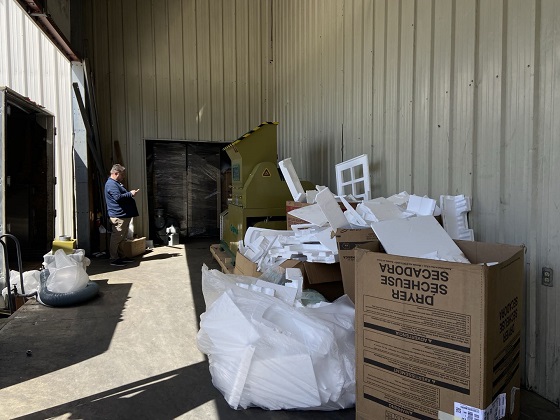
Walk behind any UK retail store, distribution hub, appliance warehouse, or construction site and you’ll see the same thing: bags of “Styrofoam” packaging that look harmless—until they start swallowing space, triggering extra collections, and making your waste yard messy fast.
The good news is styrofoam recycling is absolutely doable for UK businesses. The bad news is that loose EPS is mostly air, so it’s rarely economical to transport unless you densify it first. That’s where a Styrofoam densifier or Styrofoam compactor changes the whole equation.
This guide is written for UK sites handling commercial foam waste—not households—and it focuses on what actually works on the ground: cleaner storage, fewer lifts, and a foam output that recyclers can handle.
Why styrofoam recycling gets stuck in the UK (and how to unstick it)
EPS (often called Styrofoam in day-to-day talk) is lightweight, bulky, and awkward to collect. If you store it loose, you pay for “air shipments” and lose valuable floor space. Meanwhile, disposal costs keep nudging upwards: for example, the UK landfill tax standard rate is £126.15 per tonne in 2025–26 (rates update annually).
On top of cost pressure, UK packaging rules are tightening:
- Packaging EPR (Extended Producer Responsibility) is moving recycling costs onto producers, with invoices starting in October 2025 for year 1 fees (2025–26).
- Plastic Packaging Tax applies when plastic packaging is made/imported below the 30% recycled-content threshold, with a rate of £223.69/tonne from 1 April 2025.
- In Scotland, the single-use plastics restrictions include expanded polystyrene food containers, cups and lids (commercial supply restrictions).
None of this means “panic.” It means UK businesses are increasingly rewarded for setting up clean, trackable material streams—and EPS is one of the easiest streams to “fix” with the right equipment.
What “Styrofoam” means in UK commercial waste streams
In practice, most UK sites see EPS in these forms:
- Protective packaging from appliances, furniture, electronics, medical devices
- Moulded corner blocks, sheets, void fill, and shaped inserts
- Cold-chain boxes and some industrial transit packaging
- Construction offcuts (EPS insulation, beads, trims) and refurbishment waste
Recyclers value EPS most when it’s clean and separated (no food, no heavy dirt, minimal tape/labels). That’s why on-site volume reduction matters: it makes sorting and storing realistic.
Styrofoam compactor vs styrofoam densifier: which one fits your site?
Both machines reduce volume. The difference is how dense the output is, and how easily it moves into established recycling routes.
| Styrofoam compactor | Styrofoam densifier | |
|---|---|---|
| Best for | Retail back-of-house, warehouses, light-to-mid volumes | Higher volumes, sites wanting a more “tradable” output |
| Output | Dense blocks/logs (physical compression) | Higher-density logs/ingots (often screw compaction; some systems use heat at the surface) |
| Collection | Fewer lifts vs loose foam | Even fewer lifts + better payload efficiency |
| Typical goal | Control space + cut waste handling | Turn EPS into a consistent feedstock for recyclers |
A useful rule of thumb from the UK EPS industry: if you’re receiving enough EPS packaging that it’s becoming a storage and collection headache, it’s time to consider installing a compactor.
The simple reason densifying works: transport and handling
The BPF EPS Group notes over 10,000 tonnes of EPS are recycled each year in the UK, but most local authorities still don’t collect EPS at kerbside—commercial recycling is driven by specialist collections and good material prep.
Densifying is what makes specialist collection economical:
- Loose EPS: bulky, fragile, blows around, hard to palletise
- Densified EPS: stackable, stable, measurable, easier to load
Recent UK industry reporting also points to an important shift: as densified EPS supply becomes more consistent, some recyclers pay for densified EPS, with reported figures reaching up to ~£500/tonne depending on contamination and local demand.
(Real-world pricing varies—think of this as a signal that “dense, clean EPS has value,” not a guaranteed rate.)
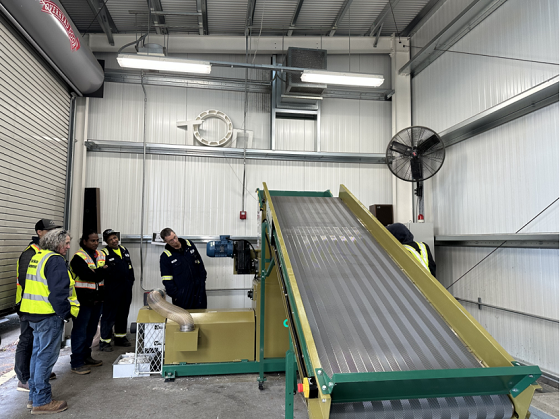
A UK-ready styrofoam recycling workflow (what to do on Monday morning)
-
Separate it at source
Give EPS its own cage/bay. Mixing EPS with film, cardboard, food waste, or general rubbish kills the economics quickly. -
Keep it dry and “white” where possible
Most sites do best with clean packaging EPS: appliance inserts, moulded corners, sheet EPS. If it’s wet or contaminated, handle that stream separately. -
Pre-break the big stuff
Cut oversized sheets so the feeding is steady. You’ll reduce jams and keep throughput predictable. -
Run the styrofoam compactor / densifier daily
A short daily run beats a “mountain of foam” once a fortnight. It’s safer, tidier, and keeps your yard under control. -
Store output like a product
Treat the blocks/logs as inventory: wrap, label, stack. It keeps collections fast and avoids mess during audits. -
Arrange collection with an EPS recycler
The UK EPS industry maintains recycler contacts and tools to help businesses find appropriate routes.
How this supports UK compliance and reporting
UK packaging waste is under the spotlight. Official UK statistics show that in 2024, 64.1% of UK packaging waste was recycled (methodology 1), while plastic packaging recycling was ~51.0%.
For businesses, the direction of travel is clear: better data, clearer responsibility, and a stronger push for “recyclable in practice,” not just in theory. And the national packaging data infrastructure is getting more robust, with reported packaging data published through the Environment Agency’s systems.
A densified EPS stream helps because it is:
- Measurable (weights and outputs are easier to log)
- Traceable (easier to show where material went)
- Operationally realistic (staff can manage it without constant firefighting)
Choosing equipment for your UK site: a quick checklist
When you spec a styrofoam densifier or Styrofoam compactor, the smartest questions are boring—but they save money.
- How much EPS do you generate per day/week? (bags per day → estimate kg/week)
- What type is it? (clean packaging vs construction offcuts vs mixed foam)
- Where will the machine live? (indoor, covered yard, dock area)
- How will you feed it? (hand-feed, bin tipper, conveyor)
- What output do your downstream partners accept? (block size, density, wrapping)
- Who owns the collection relationship? (your waste contractor vs specialist EPS recycler)
If you want to improve the commercial value of your EPS, focus on two things: consistency (same material stream) and cleanliness (low contamination). Everything else is secondary.
Why many UK sites choose GREENMAX for styrofoam recycling
For UK businesses, equipment isn’t just about compression—it’s about whether the solution fits real site conditions: staff time, space constraints, and collection realities.
GREENMAX focuses specifically on foam recycling systems (including compactors and densifiers) designed to convert bulky EPS into dense, stackable outputs that are far easier to store and move. The brand also highlights involvement with UK EPS industry efforts to support polystyrene recycling.
If your goal is straightforward—reduce collections, keep the yard clean, and make styrofoam recycling actually happen—a dedicated compactor or densifier is usually the fastest win.
FAQs
Is styrofoam recyclable in the UK for businesses?
Yes—commercial EPS is widely recyclable through specialist routes, and the UK EPS industry states that thousands of tonnes are recycled each year.
Do councils collect EPS/Styrofoam from businesses?
Most council kerbside systems don’t target EPS; businesses typically need specialist collections or a contractor that will handle it properly.
Do I need a styrofoam densifier or a Styrofoam compactor?
If your pain is mainly storage and messy yards, a compactor often solves it. If you want the most transport-efficient, recycler-friendly output, a densifier is usually the better long-term fit.
What about Scotland’s EPS restrictions?
Scotland restricts commercial supply of certain single-use EPS food containers and EPS cups/lids. Recycling still matters for EPS already in circulation and for other EPS packaging streams.