
 Select Languange
 English
 Spanish
 Polish
 Japanese
 Italy
Italy
Expanded Polyethylene Recycling for UK Automotive Tier 1 Suppliers
If you walk through the packaging area of a UK automotive Tier 1 supplier, one type of waste appears almost everywhere: expanded polyethylene (EPE) foam.
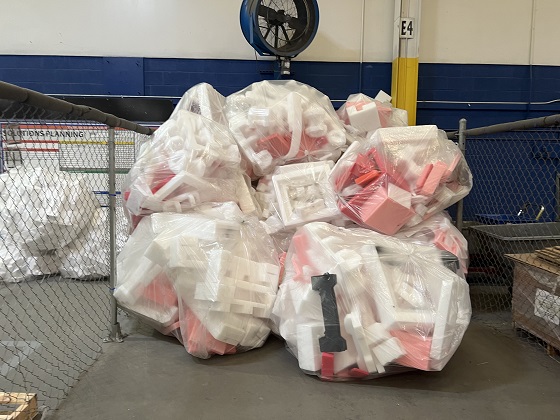
It protects dashboards, sensors, lighting modules, battery components and precision electronics during transport between OEMs and suppliers. But once parts are unpacked, the same material quickly turns into a logistics headache. Large bags of lightweight foam take up valuable floor space, fill skips too quickly, and make waste collection inefficient.
For automotive Tier 1 facilities in the UK—especially those operating under strict sustainability and cost-control targets—expanded polyethylene recycling is increasingly becoming part of the operational strategy rather than just a waste issue.
This guide looks at how UK automotive suppliers can organise practical EPE recycling on site, reduce waste transport costs, and produce a recyclable material stream that the plastics market can actually use.
Why Expanded Polyethylene Waste Builds Up So Fast in Automotive Plants
Compared with rigid plastics or metals, expanded polyethylene has a very high volume-to-weight ratio. In simple terms, it is mostly air.
That means even a small quantity of unpacked components can quickly generate large volumes of packaging waste. In Tier 1 manufacturing plants where parts arrive daily from multiple suppliers, the accumulation happens quickly.
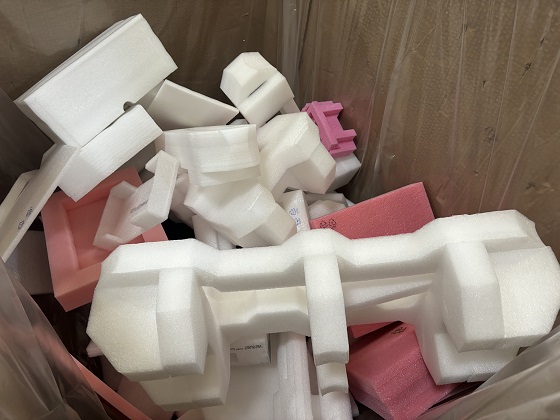
Typical sources of EPE foam waste in automotive facilities include:
Packaging for electronic modules and sensors
Protective inserts for headlights and interior components
Foam sheets used between painted or delicate parts
Transport packaging from international suppliers
Because the material is lightweight, it often ends up being stored loosely in bags or cages. This creates several operational problems:
Space pressure
Loose foam can occupy several cubic metres within days.
Higher waste collection frequency
Bins fill quickly, even though the actual weight is low.
Transport inefficiency
Waste contractors are essentially hauling air.
For many UK manufacturers trying to optimise plant layout and logistics flow, this inefficiency becomes difficult to ignore.
The Growing Pressure on Automotive Suppliers to Recycle Packaging
The UK automotive supply chain is already facing increasing expectations around sustainability and resource efficiency.
Several trends are pushing companies to rethink packaging waste handling:
OEM sustainability requirements
Major car manufacturers are increasingly requiring suppliers to reduce packaging waste and demonstrate recycling processes.
Rising waste management costs
Landfill tax in the UK continues to increase, making disposal a more expensive option for plastic packaging.
Corporate ESG targets
Many Tier 1 suppliers now publish environmental performance metrics, including waste reduction and recycling rates.
Within this context, EPE recycling offers a relatively straightforward opportunity to improve waste management performance without disrupting production processes.
Why Loose Foam Is Difficult to Recycle
Although expanded polyethylene is technically recyclable, the main challenge is transportation.
Loose foam is bulky and extremely lightweight. Sending it to a recycler without preprocessing rarely makes economic sense because transport costs outweigh the value of the material.
This is why many facilities historically chose disposal instead.
The solution is simple in principle: reduce the volume before transport.
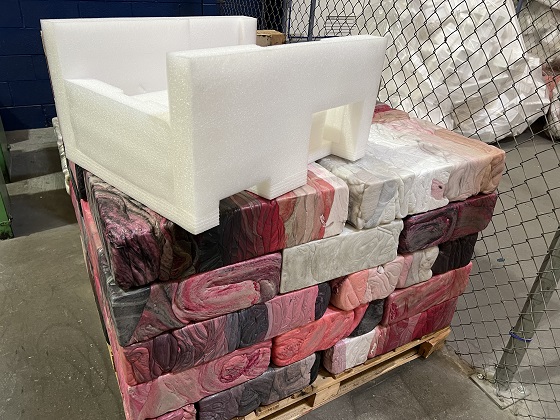
By densifying or compacting foam on site, businesses can transform loose EPE into dense blocks or ingots that are far easier to handle and ship.
How EPE Compaction Makes Recycling Practical
A typical solution used by automotive packaging operations is an EPE foam compactor or EPE foam densifier.
These machines compress expanded polyethylene and other foam materials, dramatically reducing their volume.
In practice, the process works like this:
1. Loose foam packaging is collected from unpacking areas.
2. Operators feed the material into a foam recycling machine.
3. The machine compresses the foam and removes trapped air.
4. Dense blocks or ingots are produced for storage and transport.
Depending on the equipment and material type, volume reduction ratios can reach up to 90:1.
For automotive plants, this creates several immediate operational benefits.
Operational Benefits for Automotive Tier 1 Facilities
1. Significant Space Savings
Instead of storing bags of loose foam, plants can stack compacted blocks neatly on pallets.
This helps free up valuable floor space in logistics areas and waste handling zones.
2. Lower Waste Collection Costs
With the foam volume drastically reduced, companies can cut the number of waste collections required.
Fewer pickups mean lower transport costs and reduced operational disruption.
3. A Clean, Recyclable Material Stream
Compacted EPE foam is easier for recyclers to process.
The densified material can be shredded and reprocessed into recycled polyethylene products such as:
Plastic boards
Moulded components
New packaging materials
This creates a genuine recycling loop rather than simple disposal.
4. Improved Sustainability Reporting
Many Tier 1 suppliers track waste metrics as part of their ESG reporting.
Implementing expanded polyethylene recycling allows companies to demonstrate:
Waste diversion from landfill
Improved recycling rates
More efficient packaging management
These metrics are increasingly relevant when working with OEM customers.
Integrating EPE Foam Recycling Into Automotive Packaging Operations
One of the advantages of EPE foam recycling equipment is that it can be integrated into existing logistics flows.
Typical placement within automotive plants includes:
Near goods-in unpacking stations
In packaging return areas
Within waste handling zones
Operators simply collect EPE foam packaging during normal unpacking activities and feed it into the machine.
The process requires minimal training and usually only one operator.
Because the equipment mainly handles clean packaging waste, maintenance requirements are generally low.
The Role of EPE Foam Recycling Machines in Circular Manufacturing
As automotive supply chains move toward circular manufacturing models, packaging waste is becoming part of the broader material recovery strategy.
Instead of treating EPE foam as a disposal problem, many companies are now seeing it as a recyclable resource.
By installing an EPE foam recycling machine on site, Tier 1 suppliers can:
Reduce waste transport volumes
Generate recyclable plastic material
Support sustainability goals set by OEM customers
For facilities handling large volumes of packaging foam, the operational and environmental benefits often become visible within a short period of time.
Conclusion
Expanded polyethylene plays a critical role in protecting automotive components during transport, but its waste management challenges are becoming increasingly visible in modern manufacturing environments.
For UK automotive Tier 1 suppliers, expanded polyethylene recycling offers a practical way to reduce waste handling costs while supporting sustainability targets.
By compacting foam on site using an EPE foam compactor or EPE foam densifier, companies can transform bulky packaging waste into a manageable, recyclable material stream.
As sustainability requirements across the automotive supply chain continue to rise, efficient foam recycling is likely to become a standard part of packaging management in many UK manufacturing plants.