 Select Languange
 English
 Spanish
 Polish
 Japanese
 Italy
Italy
Expanded Polyethylene Packaging Waste in UK Tier Supply Chains: a Practical Recycling Setup
If you’re a tier importer, distributor, or aftermarket supplier in the UK, you’ll recognise the same pattern: goods arrive protected, pallets get broken down fast, and expanded polyethylene packaging starts piling up in the exact places you can’t spare—goods-in lanes, racking aisles, and returns bays.
This material is “clean” at first glance, but it’s also light, springy, and bulky. That combination is what quietly drives up your waste bill: you’re paying for space and transport volume, not weight.
This article is a practical plan for tyre suppliers: how to keep expanded polyethylene packaging separate, reduce it on-site, store it neatly, and hand over a recycler-ready output so collections become predictable (and cheaper).
Why expanded polyethylene becomes a cost problem in tier operations
It takes up space before it costs money
Even if you’re doing everything “right”, loose foam profiles, corner blocks, sheets and pads quickly overwhelm bins. Once it spills into walkways, the question stops being “recycling” and becomes “how do we clear it today?”.
Loose material is expensive to collect
Hauliers don’t charge you for good intentions—they charge for lifts, mileage, and bulky loads. When your material is mostly air, you end up transporting air.
Mixed waste ruins the stream
The real killer is not the foam itself. It’s what gets mixed into it:
cardboard fragments
stretch film and straps
heavy tape / labels
general waste (food, oily wipes, dirty gloves)
Once that happens, recyclability drops and collection options shrink.
What recyclers want: the “clean stream” rule
If you want expanded polyethylene to move as a recyclable material (not bulky waste), it needs to be:
Dry
Kept separate
Low contamination (minimal tape, labels, dirt)
Consistent (mostly one material stream)
Tyre suppliers are actually well placed to do this because your packaging waste is often generated in repeatable spots: inbound breakdown, repack/kitting, and returns.
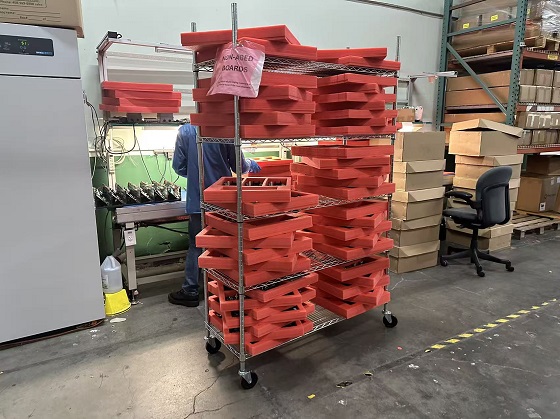
Step-by-step recycling workflow for tier suppliers
Step 1: Identify your two biggest foam hotspots (don’t overcomplicate)
Most sites find it’s mainly:
1. Goods-in / inbound breakdown
2. Repack + kitting / order picking benches
3. …and sometimes a third: returns handling
Do a simple 3-day count: how many cages or bags per day per area.
Step 2: Set up segregation that survives real shifts
What works on a warehouse floor:
One dedicated cage/bin labelled “EXPANDED POLYETHYLENE ONLY”
A second small bin beside it for tape/labels
A sign with photos of your actual foam pieces (not generic clipart)
The goal is not perfection. The goal is: “90% of it lands in the right place even on a busy Monday.”
Step 3: Reduce volume on-site (this is the lever that changes your costs)
Option A — Compaction into dense blocks (most common win)
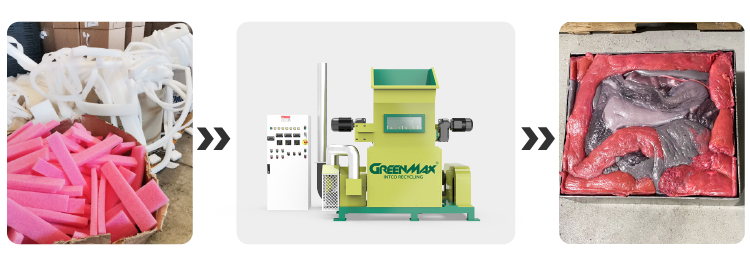
Compaction turns loose foam into dense blocks that:
stack on pallets
store cleanly
ship efficiently
are easier for recyclers to handle
In tyre distribution, this tends to be the fastest route to fewer collections because it attacks the biggest cost driver: volume.
Option B — Baling (works, but watch rebound)
Baling can help, but some foam grades rebound and you still end up with a “big” bale. Useful in some setups, but density matters.
Option C — Shred + densify (for higher throughput sites)
This can suit big DCs with stable volumes and space for a dedicated recycling corner—but it’s a more involved system.
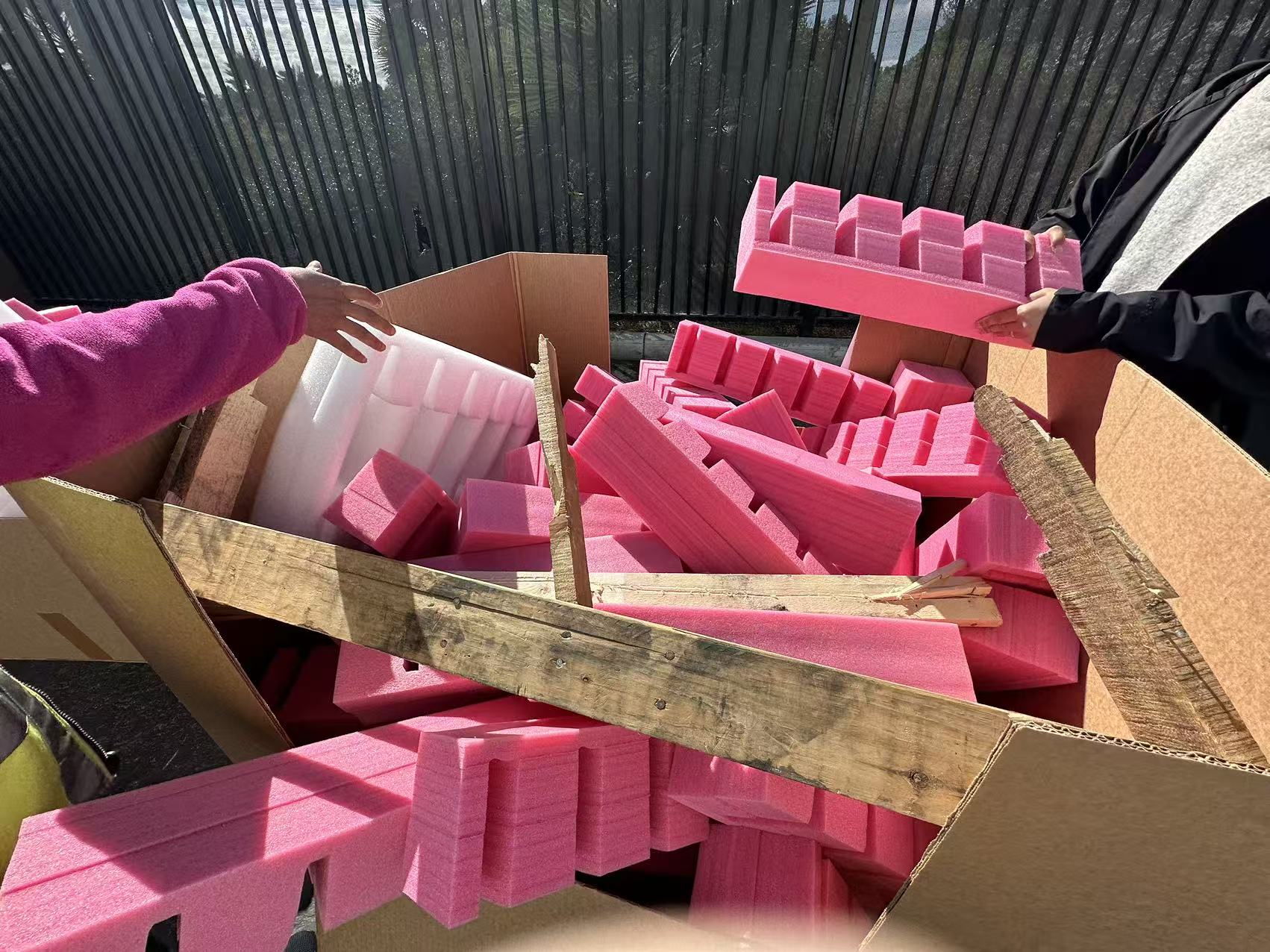
A practical on-site layout (fits UK tyre warehouses)
A simple, workable loop:
1. Foam generated at stations → placed into expanded polyethylene-only cage
2. Cages moved to a small “recycling corner” near the dock
3. Foam compacted into blocks → blocks palletised
4. Pallets stored until a sensible pickup quantity → scheduled collection
You go from “urgent clear-outs” to planned collections.
What to measure (KPIs your ops team will actually use)
You don’t need a sustainability dashboard to make this work. Track:
1. Number of cages/bags per week (before vs after)
2. Number of blocks/pallets produced
3. Collections per month
4. Net cost per month (haulage + handling, minus any rebate if applicable)
Even a basic before/after will show whether you’re paying for air today.
Common mistakes (seen in real warehouses)
“We’ll sort it later”
Later becomes never. Put the bin where the foam is generated.
“It’s clean enough”
A little tape becomes “too much tape” fast. Give staff an easy place to throw tape away.
“We only need recycling when it gets out of hand”
That’s how you end up paying for emergency lifts. The right setup prevents the pile-up.
Where GREENMAX fits
If your site is producing bulky expanded polyethylene packaging daily, an on-site compactor can turn loose material into dense, stackable blocks—helping reduce storage chaos and cut collection frequency. GREENMAX expanded polyethylene recycling machine are commonly used in warehousing and distribution environments where volume is the main cost driver.
FAQ
What is expanded polyethylene packaging?
Expanded polyethylene is a lightweight closed-cell foam used to protect products during transport and handling. It cushions well but becomes bulky waste quickly once unpacked.
Can expanded polyethylene packaging be recycled in the UK?
In many cases, yes—especially when it’s collected as a clean, separated stream and supplied in a recycler-ready form (often compacted or densified).
Why do tyre suppliers generate so much expanded polyethylene waste?
It commonly appears in inbound protection, kitting/repacking, and returns—areas that generate repeatable packaging waste every day.
What’s the fastest way to reduce collection costs?
Reduce volume on-site. Turning loose foam into dense blocks or other high-density output typically reduces storage footprint and collection frequency.
What contamination causes recyclers to reject it?
Heavy tape, labels, mixed plastics, cardboard fragments, food waste, and oily residues are common issues. A simple segregation setup prevents most of these.