
 Select Languange
 English
 Spanish
 Polish
 Japanese
 Italy
Italy
EPS Recycling in the UK: Turning Foam Waste into a Circular Opportunity
What Is EPS and How Is It Produced?
Expanded Polystyrene (EPS) is a lightweight, rigid plastic foam made by expanding polystyrene beads using steam and a blowing agent (typically pentane gas). The result is a white, airy material that’s about 98% air and 2% plastic. EPS is widely used in:
Packaging (for electronics, appliances, food, etc.)
Insulation (in construction and cold chain logistics)
Protective shipping materials
Because of its affordability, insulation performance, and shock absorption, EPS is widely used across the UK in retail, logistics, and manufacturing.
The Problem: Why EPS Is a Recycling Challenge
EPS is technically recyclable — but it’s rarely recycled in practice. In the UK, it’s estimated that only a small fraction of EPS waste is recovered for recycling. Why?
Low weight, high volume: EPS is bulky but light, making transport inefficient
Contamination risks: Food containers and soiled packaging reduce recyclability
Limited infrastructure: Not all local councils accept EPS in kerbside collection
When not recycled, EPS usually ends up in landfills or, worse, as litter in nature — where it breaks into microplastics and poses serious threats to wildlife and the environment.
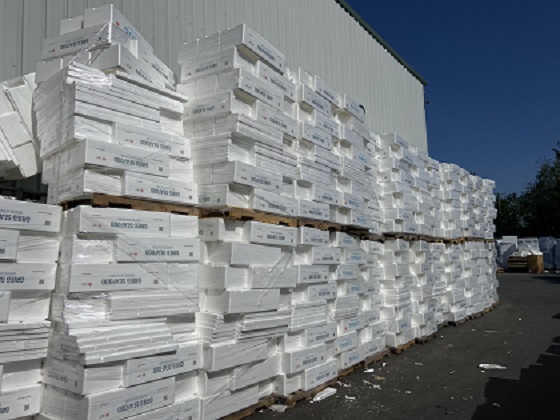
Environmental Impact of Non-Recycled EPS
When EPS is discarded improperly, the consequences can be long-term and severe:
Landfill space: EPS does not biodegrade and occupies large volumes in landfill sites
Ocean pollution: Lightweight EPS can easily escape into waterways, contributing to marine plastic pollution
Wildlife hazard: Animals may ingest EPS fragments, mistaking them for food
Missed resource potential: Recycled EPS can be reused as raw material, but much of it is wasted
In short, not recycling EPS is both an environmental risk and a lost economic opportunity.
Where Can You Recycle EPS in the UK?
While curbside EPS recycling is not yet common in the UK, more facilities and councils are now offering drop-off points or special collection services. Notable examples include:
1. Recycle More (National Directory)
Website: recycle-more.co.uk
Provides postcode-based lookup for local EPS recycling options.
2. West Sussex County Council
Accepts EPS at select Household Waste Recycling Sites (HWRS).
3. B&Q and Other Retail Chains
Some large retailers offer packaging return schemes, including EPS.
For residents, it’s important to call ahead or check online with your local council to confirm whether EPS is accepted at your nearest recycling centre.
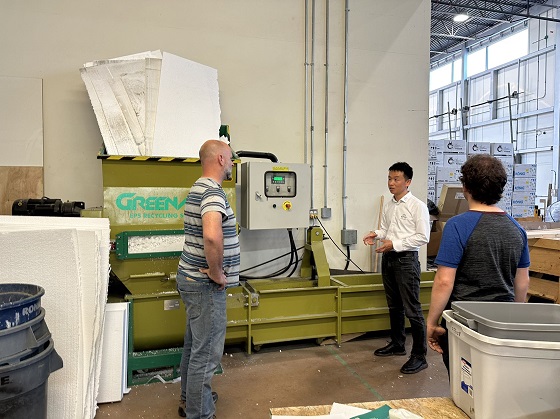
GREENMAX: Boosting EPS Recycling Efficiency Across the UK
One of the biggest barriers to EPS recycling is logistical inefficiency — transporting bulky foam is simply not cost-effective. That’s where GREENMAX EPS Recycling Machines come in.
Developed by INTCO Recycling, GREENMAX machines are now helping UK businesses, councils, and recycling centres:
Compact bulky EPS foam using cold-press or hot-melt technology
Reduce volume by up to 50:1, making transport and storage far more efficient
Transform EPS waste into reusable plastic ingots or blocks, ready for resale or reuse
Types of GREENMAX Machines:
APOLO Series (Cold Compactor): No heat required, ideal for clean EPS
MARS Series (Hot Melt Densifier): Melts EPS into dense ingots, excellent for export and reprocessing
By using GREENMAX technology, local authorities and recycling operators in the UK can divert EPS from landfills, cut waste costs, and promote a more circular economy.
Conclusion: A Growing Need for EPS Recycling in the UK
With rising environmental awareness and regulatory pressure, the UK must improve its approach to EPS recycling. While individual councils and businesses are making progress, infrastructure and technology adoption remain key.
Solutions like the GREENMAX EPS recycling machine are paving the way forward — offering practical, scalable tools that make EPS recycling viable, efficient, and profitable.
If more regions adopt these systems, the UK can move from an EPS problem to an EPS opportunity — protecting the environment while recovering valuable resources.